 Visiting Italy?
If you are planning a trip to Genoa and wondering what to eat, this guide will take you through the city’s essential flavors — from street food and traditional dishes to historic pastry shops. You can jump straight to the sections that interest you, or keep reading to discover the stories, ingredients and traditions behind every bite.
Genoa reveals itself first through food. Not as a collection of famous dishes, but as the result of centuries of exchange between land and sea. This has always been a port city, a gateway — ianua in Latin — where spices, grains, olive oil, and ideas arrived daily on ships from across the Mediterranean.
Walk through the narrow caruggi of the historic center and imagine them filled with camalli unloading cargo, sailors waiting to depart, farmers coming down from the hills, traders and merchants gathering for making business. Many had no kitchen of their own. They needed food that was warm, nourishing, affordable, and ready to eat while standing up, leaning against a wall, or under the arcades of Sottoripa.


Much of Genoa’s cuisine was born there: in the glow of wood-fired ovens inside old sciamadde, in the scent of olive oil rising from friggitorie, and in bowls of minestrone carried to crews anchored in the harbor.
Once you know this, a slice of focaccia is no longer just bread with oil. Farinata is not simply a chickpea flatbread. Even gelato carries the memory of convent gardens and maritime trade.
If you are wondering what to eat in Genoa, the answer is not just a list of dishes. It is a story shaped by necessity, trade, and refinement.
In the sections below, you will find the essential foods to try, and the context that gives them meaning.
Genoa street food: where to start
To understand what to eat in Genoa, you must begin in the street.
Long before restaurants became destinations, the historic center of Genoa was already feeding the city. Beneath the arcades of Sottoripa and inside the narrow caruggi, small ovens and frying shops offered food to sailors, dockworkers, and traders who had neither time nor a kitchen. Street food here was never a trend. It was a necessity.
Genoese Focaccia: The One Thing You Cannot Miss
Golden, slightly crisp on the outside and soft inside, Genoese focaccia is more than just a snack — it is a daily ritual. In Genoa, it is eaten for breakfast, as a quick bite during the day, or even dipped into cappuccino, a habit that might surprise visitors but perfectly captures the city’s food culture.

Made with flour, water, yeast, olive oil and salt, focaccia may seem simple, yet its balance of texture and flavor is the result of centuries of practice. The surface is dimpled by hand and generously brushed with olive oil and brine, creating that signature sheen and savory depth.
But not all focaccia is the same. Across the city, each bakery has its own interpretation — some thinner and crispier, others thicker and more airy. The best way to understand it is to taste it fresh out of the oven, still warm, ideally in the morning when locals line up for their daily piece.
In this video from my Flavors of Genoa series, I take you inside some of my favorite Genoa’s bakeries to peep how focaccia is actually made.
This is where Genoa reveals itself most clearly — in simple places, everyday habits and flavors that rarely need explanation.
Watch the full video on YouTube
If you’d like to go beyond the surface and discover where locals actually eat focaccia, you can join one of my Genoa food tours or explore my curated Genoa food guide — where I share the places I return to again and again.
If you want to bake it your self here on the blog there are two recipes: the perfect Genovese focaccia recipe we usually make at home and the Genovese focaccia recipe (indirect method), the bakers’ one, starting with a sponge.
Farinata: Genoa’s Ancient Chickpea Flatbread
If focaccia is soft and rich with olive oil, farinata is its perfect counterpart — thin, golden and deeply savory. Made with chickpea flour, water, olive oil and salt, this simple preparation dates back centuries and reflects Genoa’s long history of trade across the Mediterranean.

Baked in large copper pans inside wood-fired ovens, farinata develops a delicate crust on the outside while remaining creamy and almost custard-like in the center. It is sliced into irregular pieces and eaten hot, often standing at a small counter or on the street just outside the bakery.
Its flavor is subtle but unmistakable, with the nuttiness of chickpeas enhanced by the richness of olive oil and a slight smokiness from the oven. Like focaccia, it is part of everyday life — something quick, satisfying and deeply tied to the rhythm of the city.
While focaccia might be the first bite most visitors fall in love with, farinata reveals another side of Genoa — simpler, older and just as essential.
In this video from my Flavors of Genoa series, I take you inside some of my favorite Genoa’s “bakeries “sciamadde” – old eateries – to see how farinata is actually made.
If you want to prepare it at home, here is my Farinata recipe.
Friggitorie: Panissette and Frisceu
Beyond bakeries, another essential stop in Genoa’s street food scene is the friggitoria. Here, the flavors are bolder, the textures crispier, and the atmosphere unmistakably local.
Among the most iconic bites are panissette, small sticks of chickpea dough, lightly fried until golden on the outside while remaining soft inside. Simple and deeply satisfying, they share the same humble origins as farinata, transforming the same ingredients into something entirely different through technique. Read the panissette recipe on this blog for give them a try at home.
Then there are frisceu — delicate fritters made with a light batter, sometimes enriched with herbs, stockfish or vegetables. Irregular in shape and irresistibly crisp, they are meant to be eaten hot, often straight from a paper cone while walking through the narrow streets of the historic center. I love them with some cod inside (here my recipe)

Sciamadde: Vegetable Pies and Polpettone
Among the most distinctive places in Genoa’s food landscape are the sciamadde — humble, historic eateries once identified by the flame (“sciamadda” in dialect) that burned continuously in their wood-fired ovens. These were not restaurants, but places of everyday cooking, deeply tied to the city’s tradition of meatless cuisine.
Here, the focus is on “torte di verdura” vegetable pies, made with thin layers of dough (called “pasta matta”) and filled with seasonal ingredients such as chard, artichokes, zucchini or onions. Each pie reflects a balance between simplicity and care, where olive oil, herbs and fresh produce come together in preparations that are both light and deeply flavorful. The most famous one is “torta Pasqualina” prepared for Easter. It is stuffed with Swiss chars and ricotta and brings whole eggs inside.

Alongside them, you will often find polpettone — not a meatloaf, as the name might suggest, but a baked dish made with potatoes, green beans, eggs and cheese. Soft inside and lightly golden on top, it is a staple of home cooking that has naturally found its place in the street food culture of Genoa. You can find my polpettone recipe here on the blog and watch my video recipe on youtube.
If you want to taste the most authentic street food in Genoa, head to the historic center. Look for small, old shops rather than modern storefronts. The best places are often modest, with marble counters, tiled walls, and ovens that have been burning for decades.
Street food is the most immediate way to experience Genoa — but it’s also the easiest to miss if you don’t know where to go. The best bakeries, friggitorie and sciamadde are often hidden in plain sight, with no signs pointing them out. If you’d like to discover these places the way locals do, you can join one of my Genoa food tours or explore my curated Genoa food guide, where I share the spots I trust and return to every time.
Sweet Genoa: gelato and historic pastry shops
If Genoa’s street food tells the story of labor and necessity, its sweets reveal another side of the city — one shaped by convent gardens, noble tables, and the quiet elegance of historic cafés.
Sugar arrived here through maritime trade. As well almonds, citrus peels, candied fruit, and spices arrived from the trades with the Arabic countries and became part of a refined tradition that still survives in the old pastry shops of the historic centred.
Gelato: unusual flavors with a memory
In Genoa, gelato is not just a summer treat, but another way to experience the city’s ingredients and traditions. Beyond the classic flavors, many gelaterie still reflect a deeply local identity, shaped by history, trade and the natural landscape.
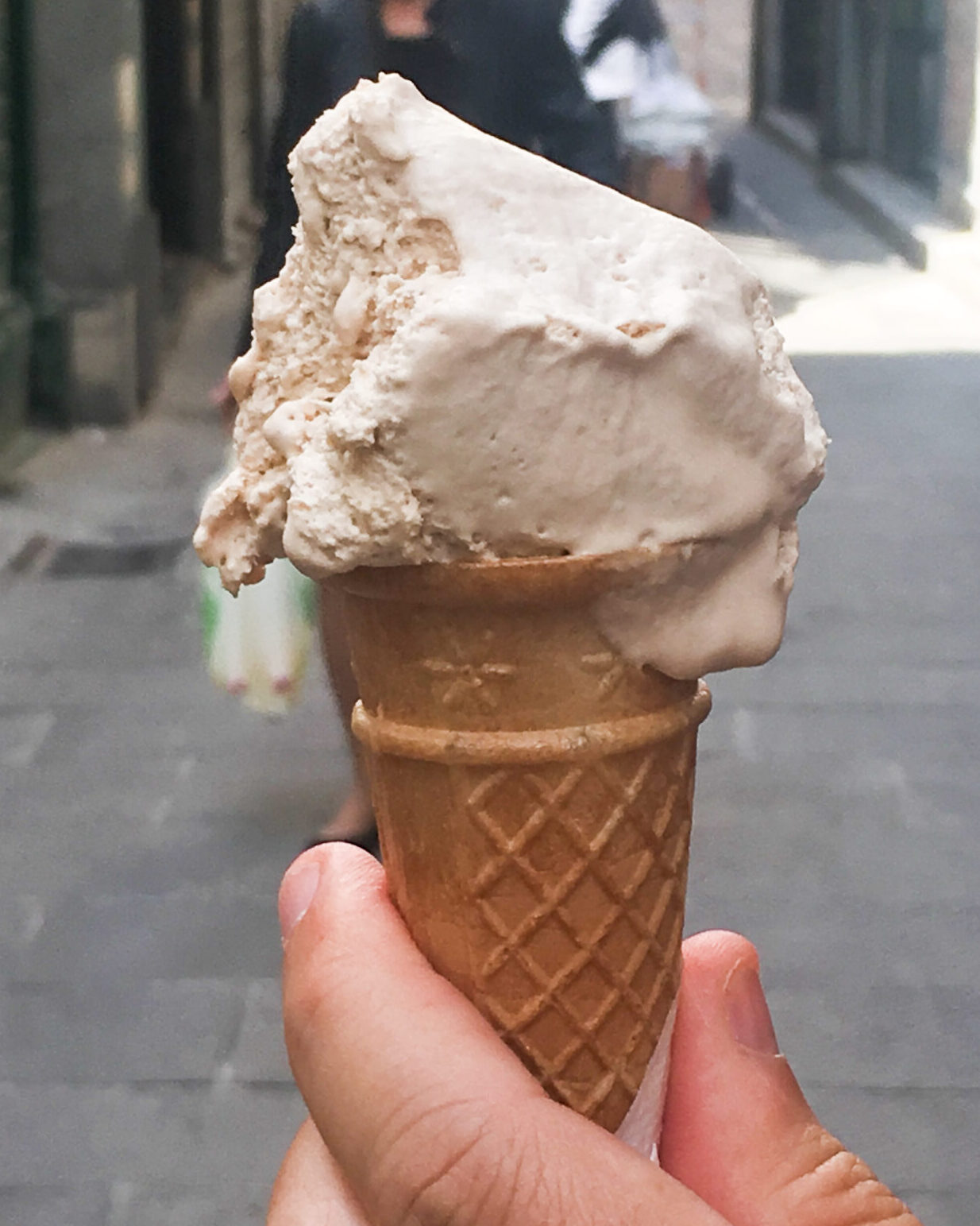
The most iconic flavor is panera — a creamy gelato made with coffee and fresh cream, born in Genoa and still beloved by locals. Its taste is smooth and rounded, with a delicate balance between sweetness and the gentle bitterness of coffee. Simple, yet unmistakably tied to the city.
But what makes gelato in Genoa truly unique is the presence of flavors that echo the region itself. You might come across chinotto from Savona, with its complex citrus bitterness; rose, from the inner Scrivia Valley, floral and perfumed; or biter orange blossom from Vallebona, light and aromatic, reminiscent of orchards overlooking the sea.
In this video from my Flavors of Genoa series, I take you inside some of my favorite Genoa’s gelato shops.
These are not just unusual choices, but expressions of a place where cooking has always been connected to nature — herbs, flowers and fruits finding their way into both savory and sweet preparations.
Watch the full video on You tube
Historic Pastry Shops and Confetterie
Step inside a traditional Genoese pastry shop and you will notice the difference immediately. Marble counters, mirrors, frescoed ceilings and ornate details create an atmosphere that feels closer to a salon than to a simple bakery. These are not just places to buy sweets, but spaces that reflect the taste and social status of the city’s aristocracy and upper bourgeoisie.
Unlike other parts of Italian cuisine shaped by frugality, Genoese pastry tells a different story — one of wealth, trade and refinement. Sugar, once an expensive and precious ingredient, was accessible only to the richest families. Sweets were not everyday food, but a sign of status, reserved for special occasions or for those who could afford them.

This legacy is still visible today. Many of Genoa’s historic pastry shops have been open for more than a century, and their interiors remain largely unchanged — a quiet continuity that turns each visit into a step back in time, to an era defined by elegance and cultivated taste.
Candied fruits — jewel-like, translucent and meticulously prepared — remain one of the clearest symbols of this tradition. Alongside them, almond-based pastries, soft amaretti, delicate brioche and elaborate cakes reveal a pastry culture that balances restraint and indulgence, simplicity and sophistication.
In this video from my Flavors of Genoa series, I take you inside some of my favorite Genoa’s Pastry shops.
Sweetness in Genoa is never excessive. It is measured, layered and precise — yet capable of moments of true richness. Like the city itself, it reflects a refined sensibility shaped over centuries, where even dessert becomes an expression of place.
Want to explore Genoa through its sweet traditions? Check my food tours or discover by your own with my curated foodie guide.
Traditional Genoese dishes: what to eat beyond street food
Beyond street food, Genoese cuisine slows down. It moves into kitchens, Sunday tables, and recipes that take time — not to impress, but because they always have. This is a cuisine shaped by restraint and precision, where herbs, greens and a handful of ingredients are enough to build something complete.
Genoa pasta and sauces (Primi Piatti)
Pesto Genovese
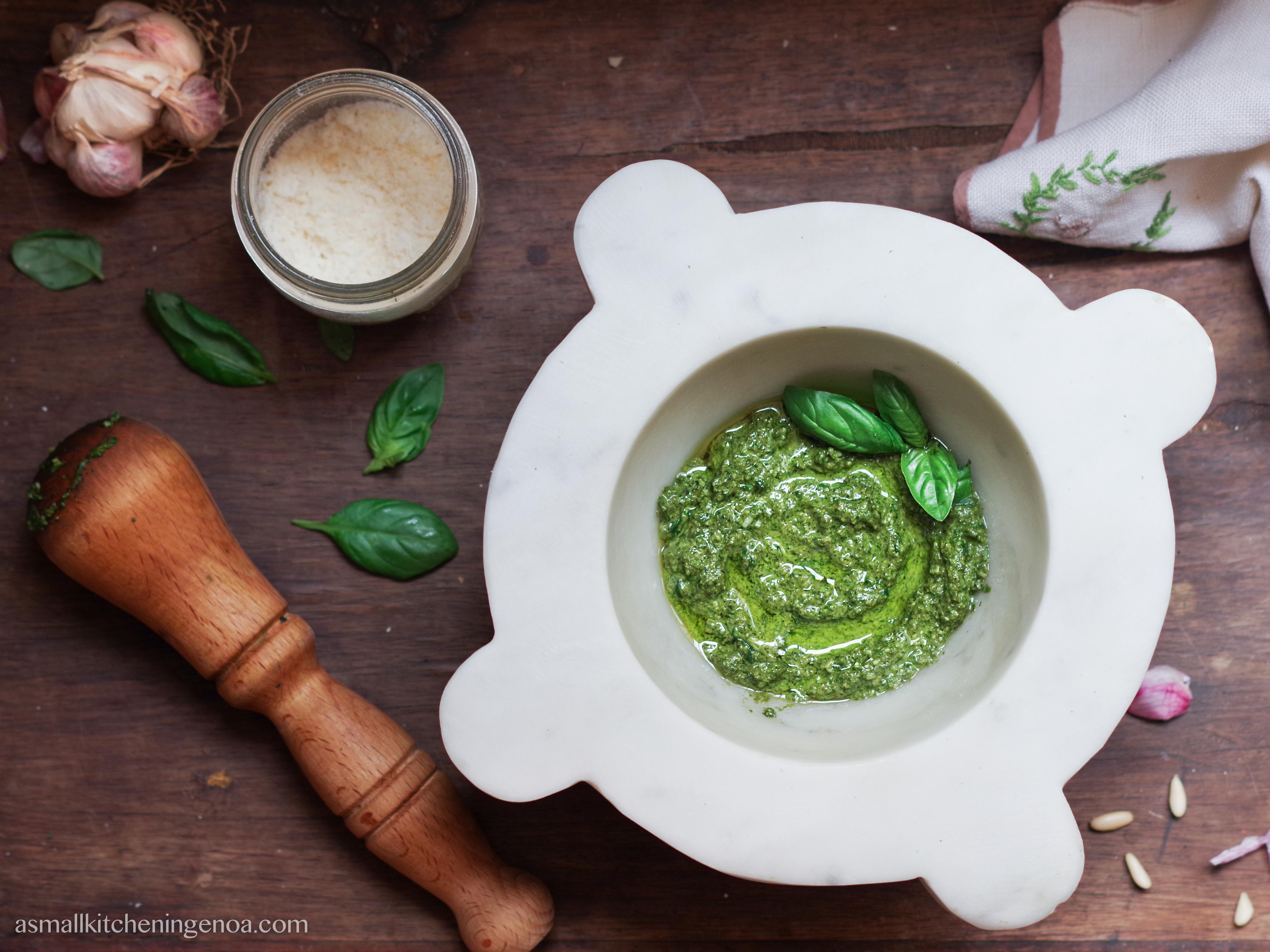
No dish represents Genoa more than pesto — a fragrant sauce made with fresh basil, pine nuts, garlic, Parmigiano Reggiano, Pecorino and olive oil, traditionally crushed in a mortar.
It is served with dry pasta and fresh pasta. When it seasons dry pasta you will likely find it accompanied by potatoes and greenbeans (the so called “pesto avvantaggiato”).

Pesto may appear simple, but every detail matters — the variety of basil, the balance of flavors, the rhythm of the mortar. It is a preparation that invites you to look closer.
If you’d like to go deeper, you’ll find two articles on this blog dedicated to pesto: one exploring the ingredients and the traditional method, and another tracing its origins and history.
Also, in this video of my Youtube series “Flavors of Genova” I guide you how to order pesto in a Genoa restaurant (which is not so easy as it may appear!)
For a more direct experience, I also lead visits to basil greenhouses combined with a hands-on pesto class in the mortar — an opportunity to follow the ingredient from the plant to the final gesture (with tasting of course!)
Pansotti with Walnut Sauce (Pansotti con salsa di noci)
Large stuffed pasta filled with wild herbs and fresh cheese, pansotti reflect the tradition of cucina di magro. They are dressed with a creamy walnut sauce made with soaked bread, garlic, olive oil, and marjoram — a combination both rustic and refined.
Rich, slightly bitter and creamy at the same time, it reflects the region’s deep connection to foraged ingredients. On the blog you can find a post with story and recipe of pansoti.

Genoese Ravioli with “Tocco” (Ravioli al tocco)
Genovese ravioli are filled with a mixture of meat and greens and usually are serve with long-simmered beef sauce — rich but restrained. It is a dish for Sundays and celebrations. Again, as I’m a Genovese home cook and food writer, I already shared here my ravioli recipe, and my tocco recipe.

Minestrone alla Genovese
A vegetable soup deeply linked to the port city. Traditionally enriched at the end with fresh basil pesto, it combines seasonal vegetables, beans, and pasta or rice. Simple in appearance, complex in aroma. If you taste it and love it, you can cook it once back home with my minestrone recipe.
If you want to explore more about Ligurian pasta (names, shapes, origins) you can also read my Liguria food guide | Italian Riviera stuffed pasta and my Liguria food guide |Italian Riviera traditional pasta.
Genoa Meat and seafood (secondi Piatti)
Capponmagro
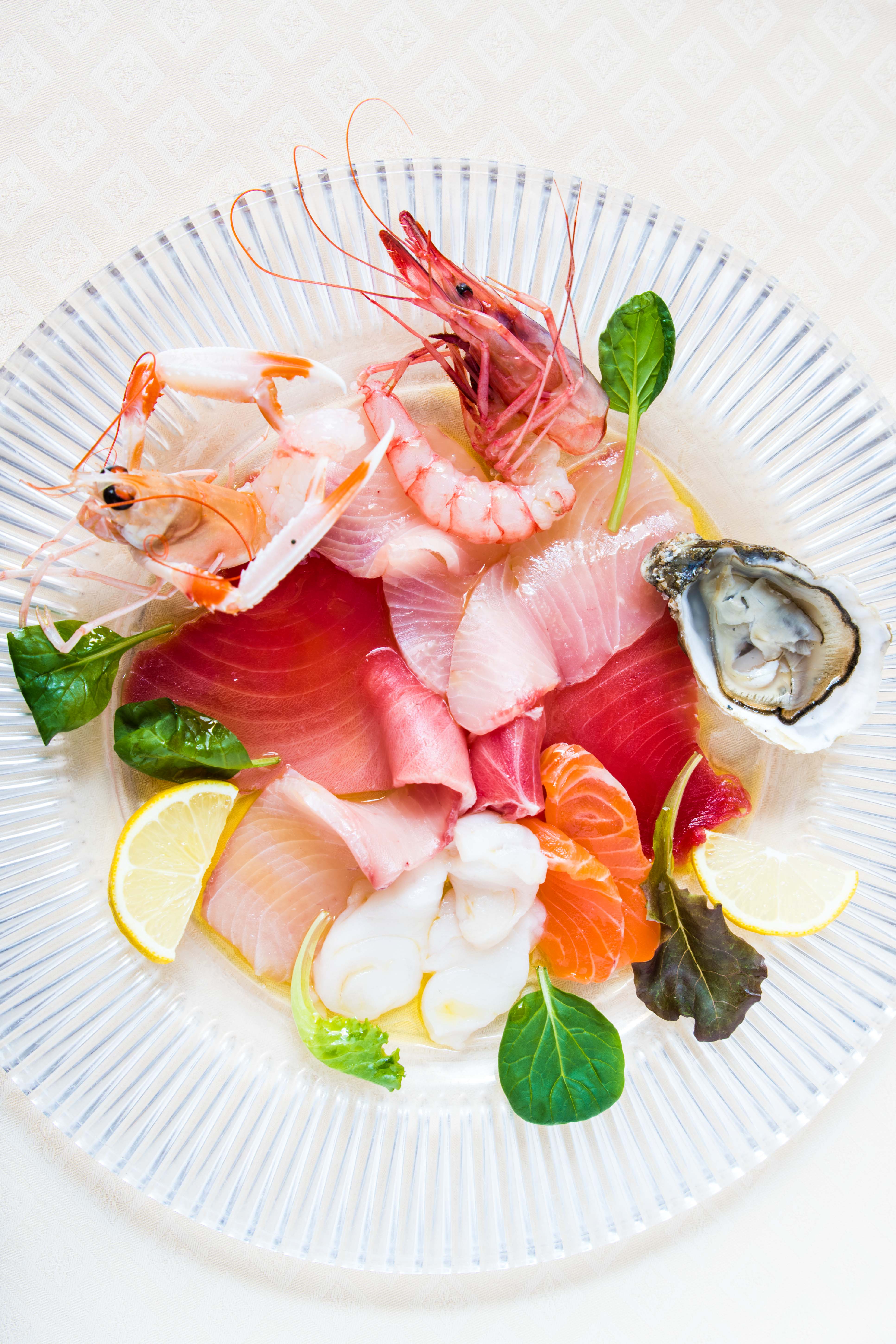
Often served as an elaborate antipasto, capponmagro is a layered composition of fish, vegetables, and hard biscuits soaked in seawater or vinegar, bound together with green sauce. It is both theatrical and symbolic — once a display of maritime abundance and noble refinement. Often restaurants offer it as an appetizer in single portions.
Stoccafisso Accomodato
Dried cod slowly cooked with potatoes, olives, and pine nuts. Stoccafisso accomodato is a reminder of Genoa’s trade routes with Northern Europe, where stockfish was imported and transformed into a deeply local dish.
Cima alla Genovese
A stuffed veal breast filled with herbs, vegetables, eggs, and sometimes pine nuts, then slowly simmered and sliced. Served cold, it embodies patience and precision. Cima Genovese is a classic of Ligurin Cucina Povera.

Tomaxelle
Tomaxelle are thin slices of veal rolled around a filling of meat, herbs, pinenuts then gently braised with or without tomato sauce .
Braised Rabbit (Coniglio stufato alla ligure)
Rabbit cooked with olives, pine nuts, and aromatic herbs, always braised with a generous dash of Ligurian wine. Light yet aromatic, Braised rabbit reflects the rural side of Liguria.
Trippa in umido
Stewed tripe, once central to the diet of working Genoa. Served in generous portions, it recalls the old tripperie that opened at dawn to feed laborers.
What unites these dishes is not extravagance, but intelligence. Genoese cuisine is careful, measured, and deeply connected to seasonality and place.
If you are visiting Genoa, look for traditional trattorie where these recipes are prepared without reinterpretation. Their strength lies in balance and local ingredients, not reinvention. Looking for the places locals actually go? Explore my curated Genoa food guide.
How to Experience Genoa Through Food
Reading about Genoa’s cuisine is a beginning. Tasting it in the right place makes the difference.
Many of the most authentic flavors of the city are not immediately visible to visitors. The best focaccia is often found in modest bakeries. The most traditional trattorie do not advertise loudly. Historic pastry shops can look understated from the outside.
If you would like to explore Genoa through its flavors with historical insight and carefully selected stops, you can join one of my Genoa Food Tours. A guided food tour allows you to experience these places with context — to understand why a certain oven matters, why a recipe developed in a particular neighborhood, and why restraint defines so much of Ligurian cooking.
→ Discover the Genoa Food Tours
If instead you prefer to explore independently, my Genoa Food Guide gathers carefully chosen places, practical advice, and historical notes to help you navigate the city’s culinary landscape at your own pace.
→ Download the Genoa Food Guide
For those who prefer a more hands-on experience, Ligurian cuisine also reveals itself through preparation. In my cooking classes, we shop ingredients together at the market and the cook with traditional techniques — from pesto made in a mortar to fresh pasta shaped by hand — connecting recipes to the land and the people that shaped them. You can learn more about my Italian cooking class in Genoa here:
Finally, if you’d like to experience Ligurian cuisine beyond the journey, my bilingual cookbook Liguria in Cucina – the Flavors of Liguria invites you to recreate these flavors at home — a way to revisit places, moments and memories long after you’ve left the Riviera!