 Visiting Italy?
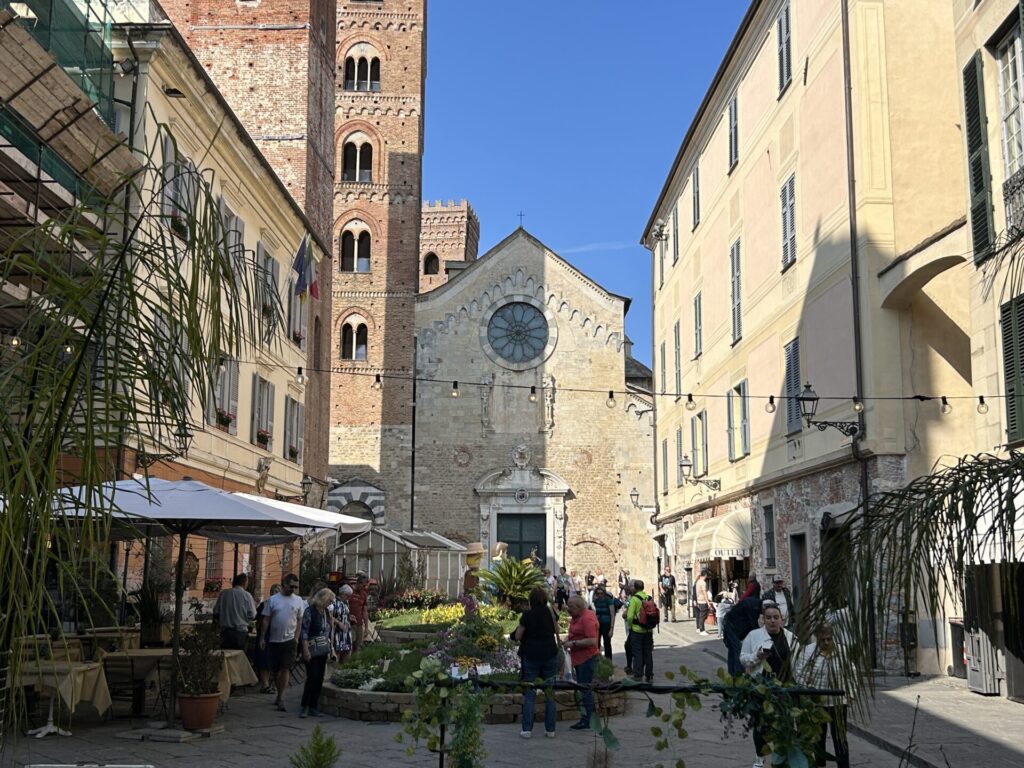
A few days ago I was in Albenga for Fior d’Albenga — an event that every year fills the city with flowers and tells the story of its deep connection with the land that surrounds it — where I also had the pleasure of presenting my book Liguria in cucina – The Flavors of Liguria.
It was the perfect excuse to carve out some time and lose myself in the narrow streets of the historic center, hunting for something good to eat.
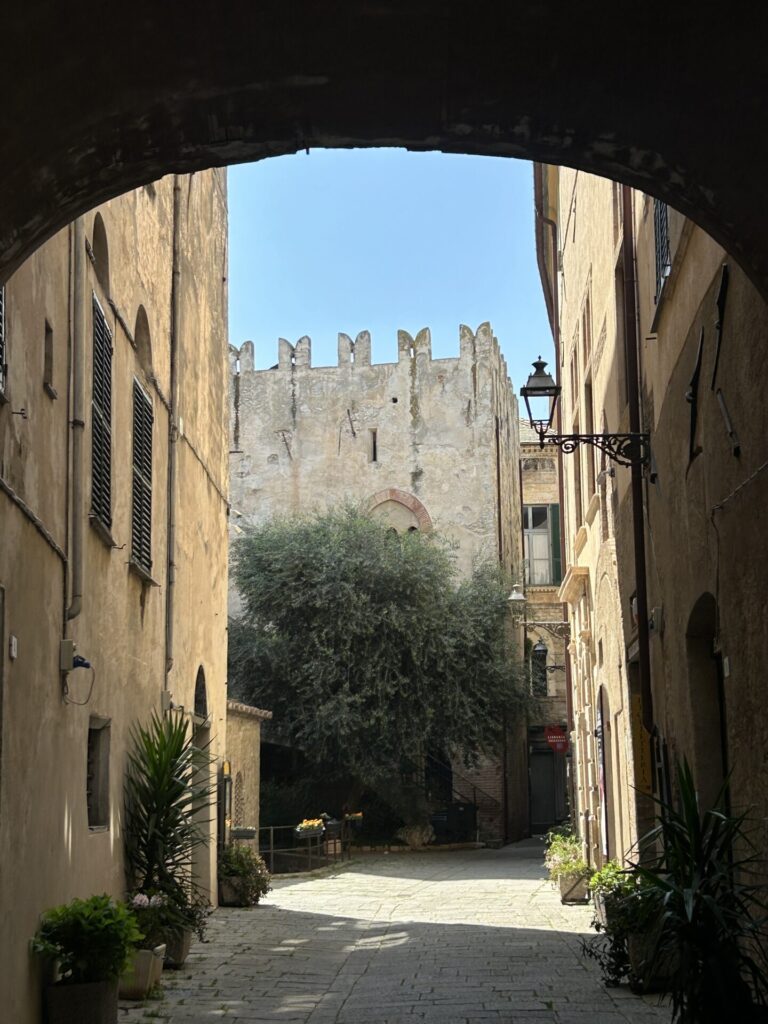
Albenga is a city that reveals itself slowly: around every corner, between medieval towers and quiet squares, you’ll find small shops, bakeries, delicatessens, and local spots that tell the story of a very real, everyday Liguria, still deeply connected to the countryside around it (Albenga is the only plain we have in Liguria).
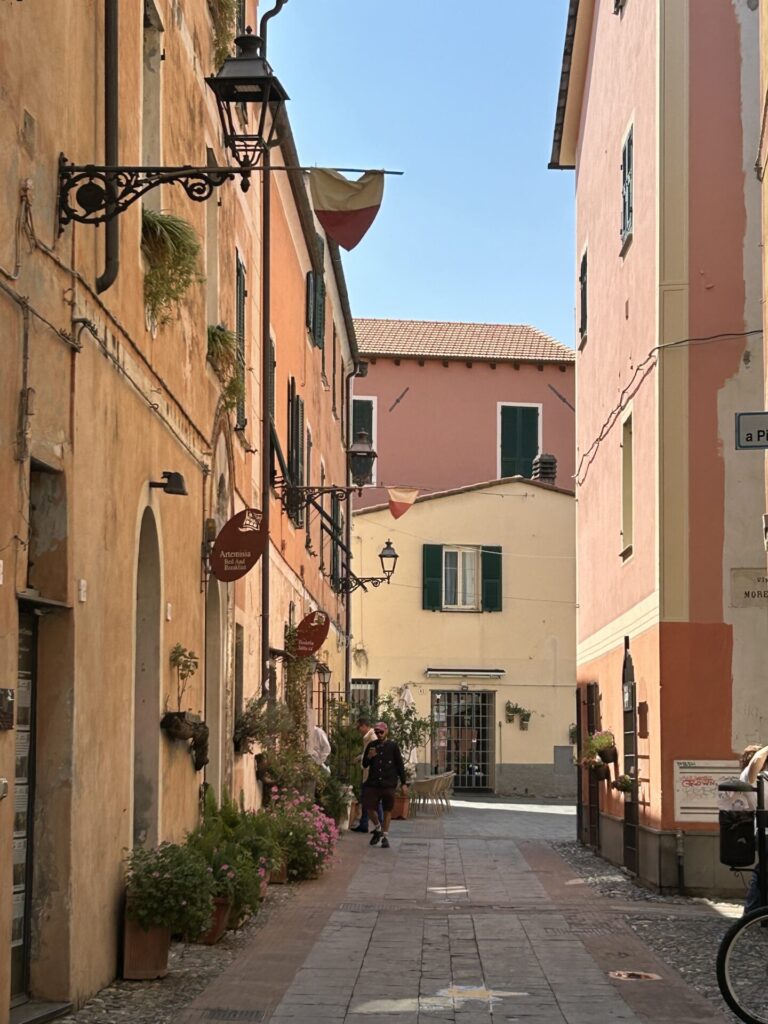
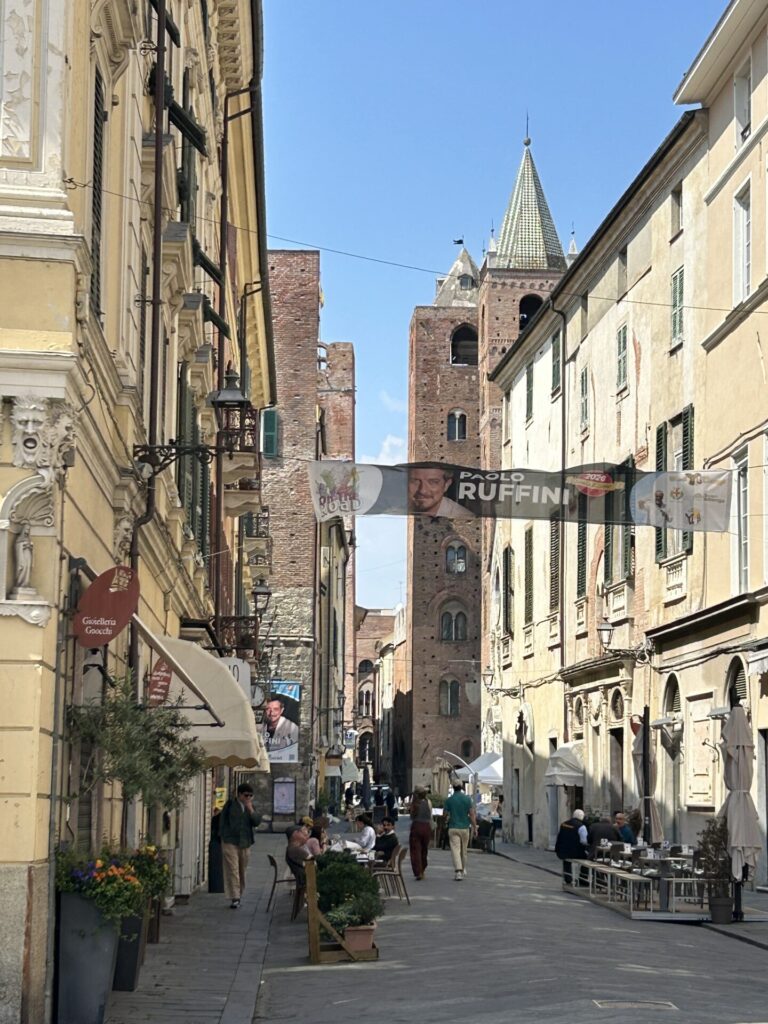
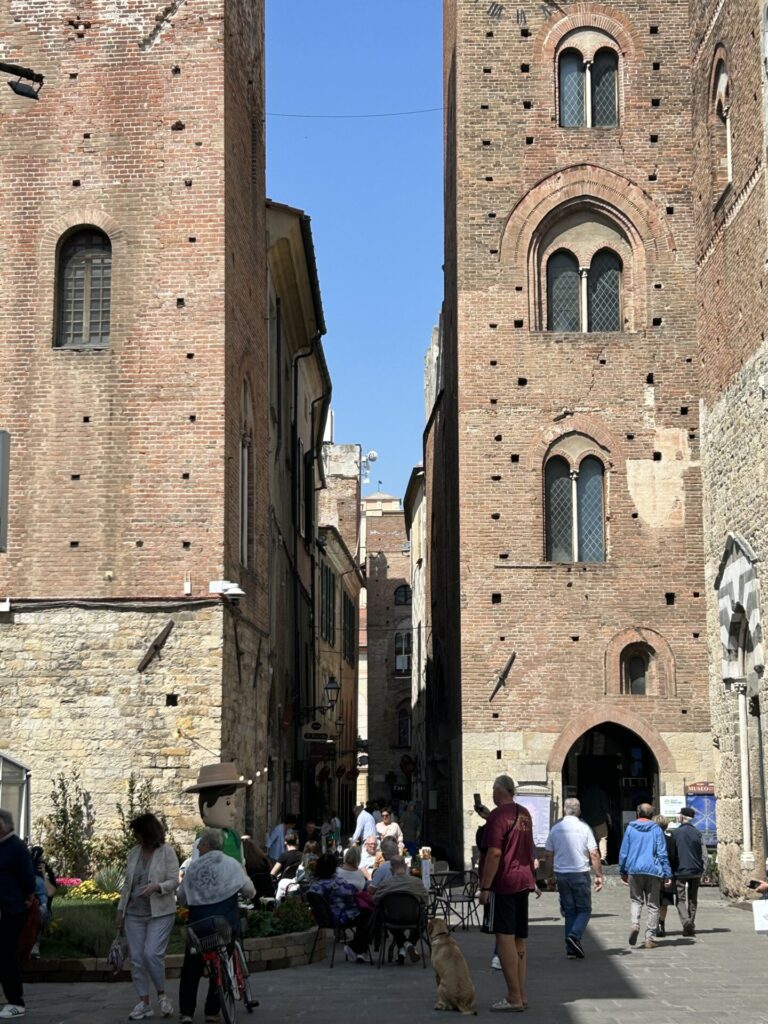
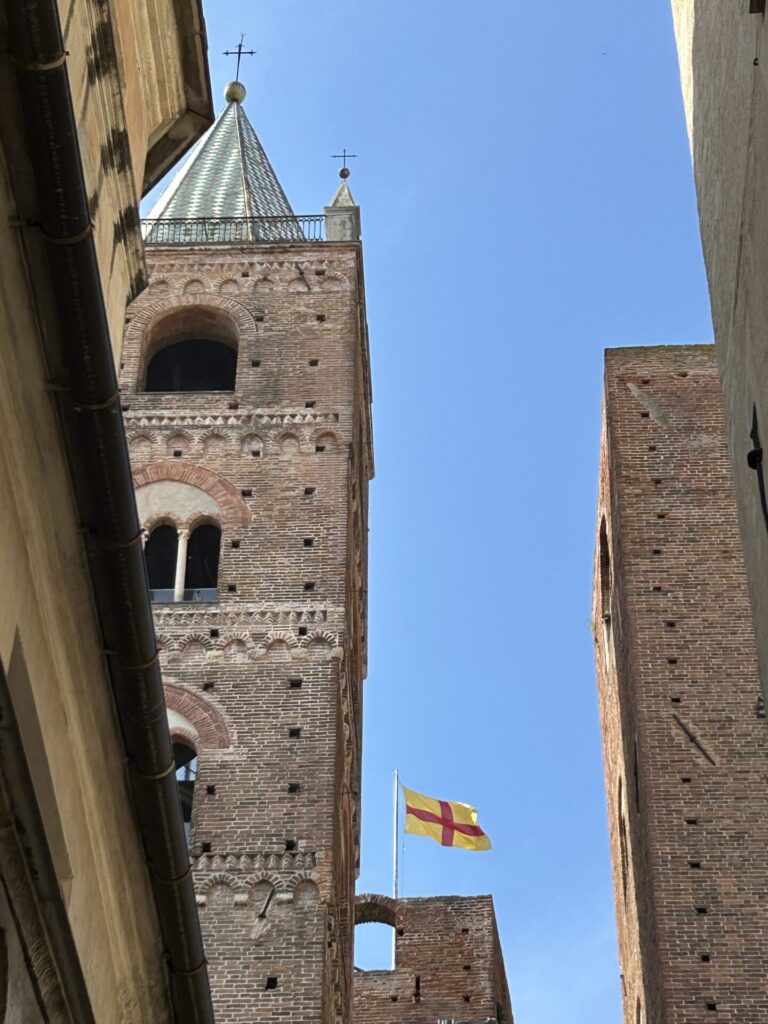
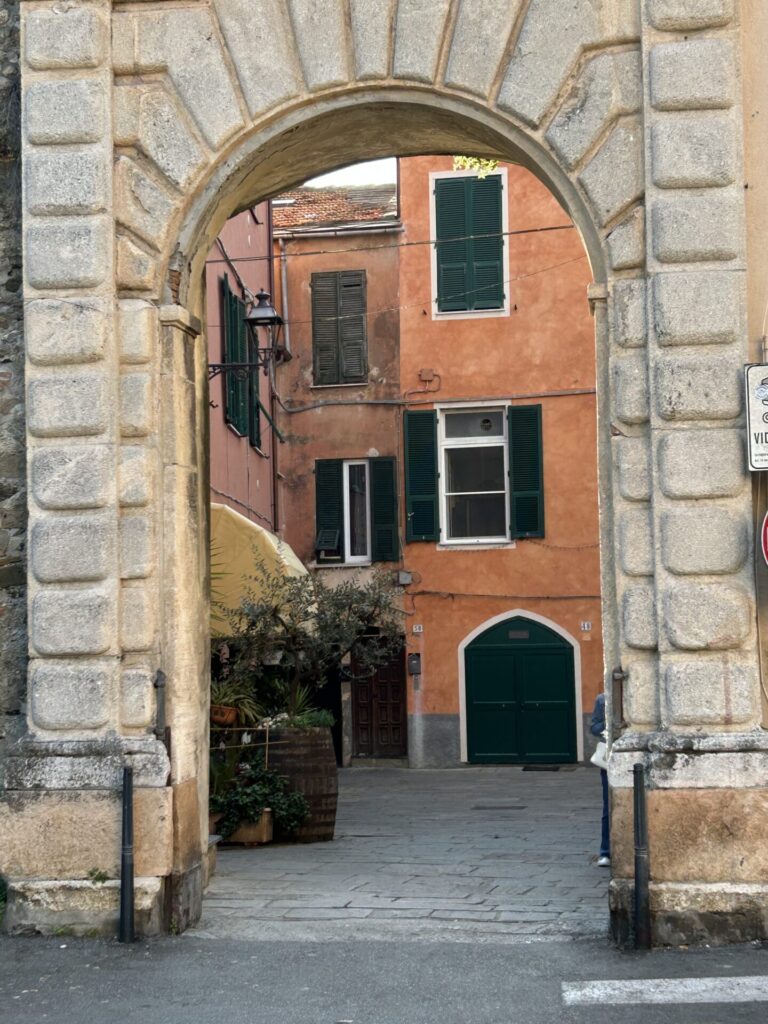
What follows is a very personal selection of the places I visited: all different, yet united by a strong identity and a clear idea of food and product.
If you find yourself in Albenga and want to taste something authentic and deeply rooted in this land, these are the places I think you should start from.
At the end of this post you will also fine a Google Map with all the addresses I selected.
Let’s start!
Museo della Civiltà dell’Olio – Frantoio Sommariva
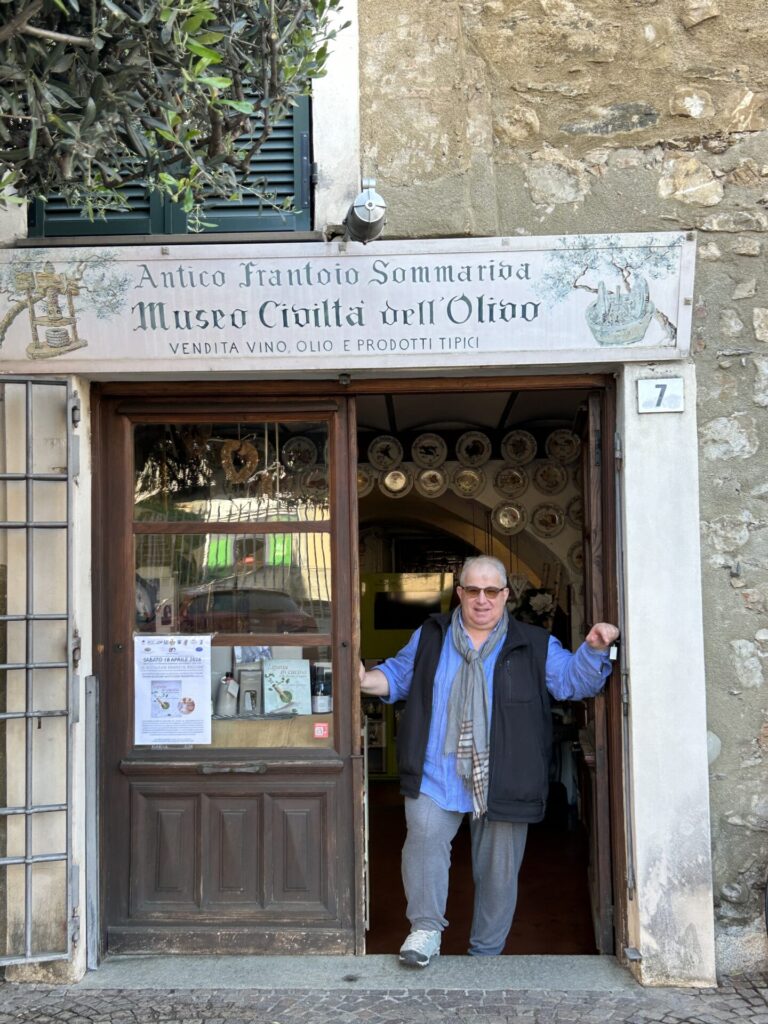
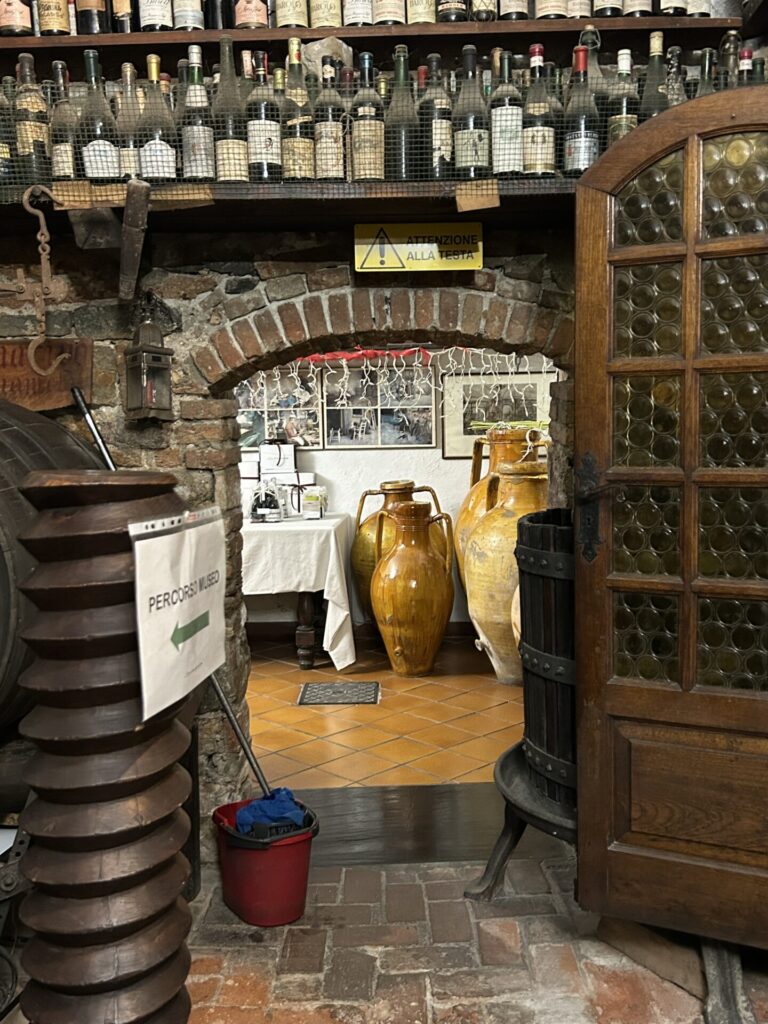
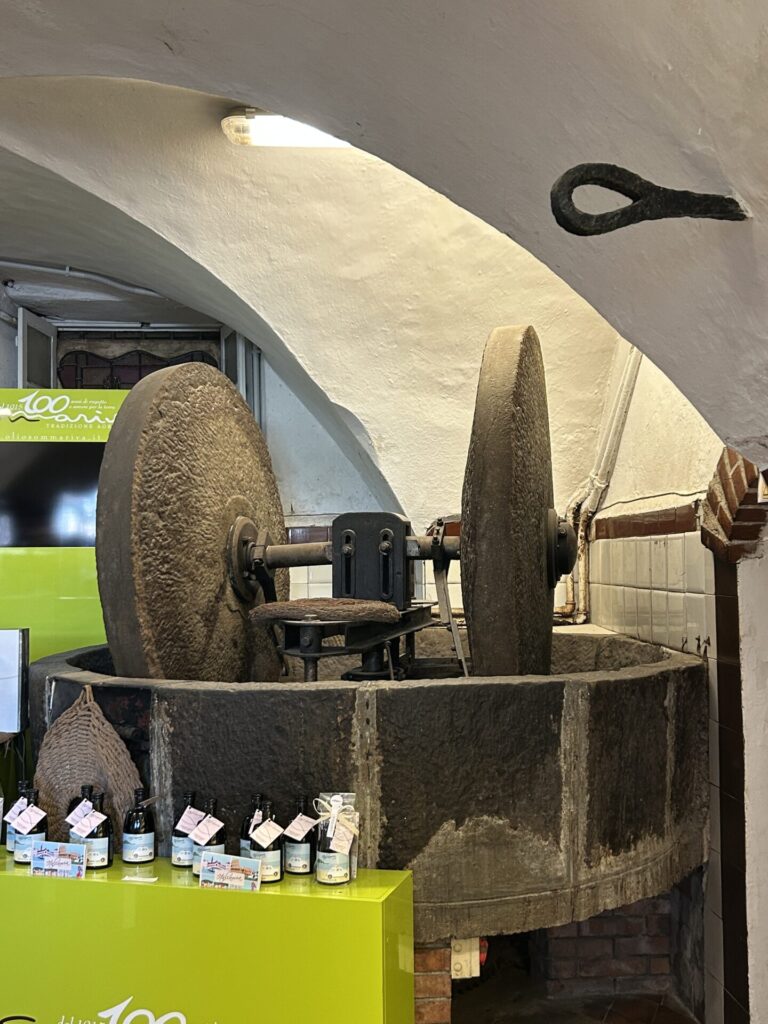
Inside the medieval walls of Albenga, in a space that was once truly an olive mill, you’ll find a fascinating hybrid place: Museo della Civiltà dell’Olio della famiglia Frantoio Sommariva (Museum of Olive Oil Civilization run by the Sommariva family).
As soon as you walk in, you feel like you’re stepping through time. The old stone millstones are still there, solid and silent, telling the story of a craft that shaped the landscape and economy of western Liguria for centuries. Alongside them, though, the present is very much alive: the mill is still active, with a contemporary production that continues the tradition.
The visit becomes a dialogue between past and present.
The heart, of course, is the oil. Here you can explore a wide and articulated range: Ligurian extra virgin olive oils made from different varieties, including Taggiasca, but also pignola and colombaia. The selection spans from DOP to organic oils, blends, and monocultivars, offering a complete picture of local production.
Alongside the bottles, a pantry that feels like an extension of the Ligurian garden: artichokes in oil, preserved vegetables, olive pâtés, artichoke spreads. Everything is processed and preserved using the company’s own oil, in a coherent and deeply territorial approach where each product is connected to the others.
What makes the experience even more meaningful is the presence of the owner, Agostino Sommariva, a historic figure in the city. He has been working in this territory for over sixty years, becoming a reference point for the local food culture. His welcome is direct, genuine, without formality — the kind that turns a visit into a real encounter.
Zio pagnotta
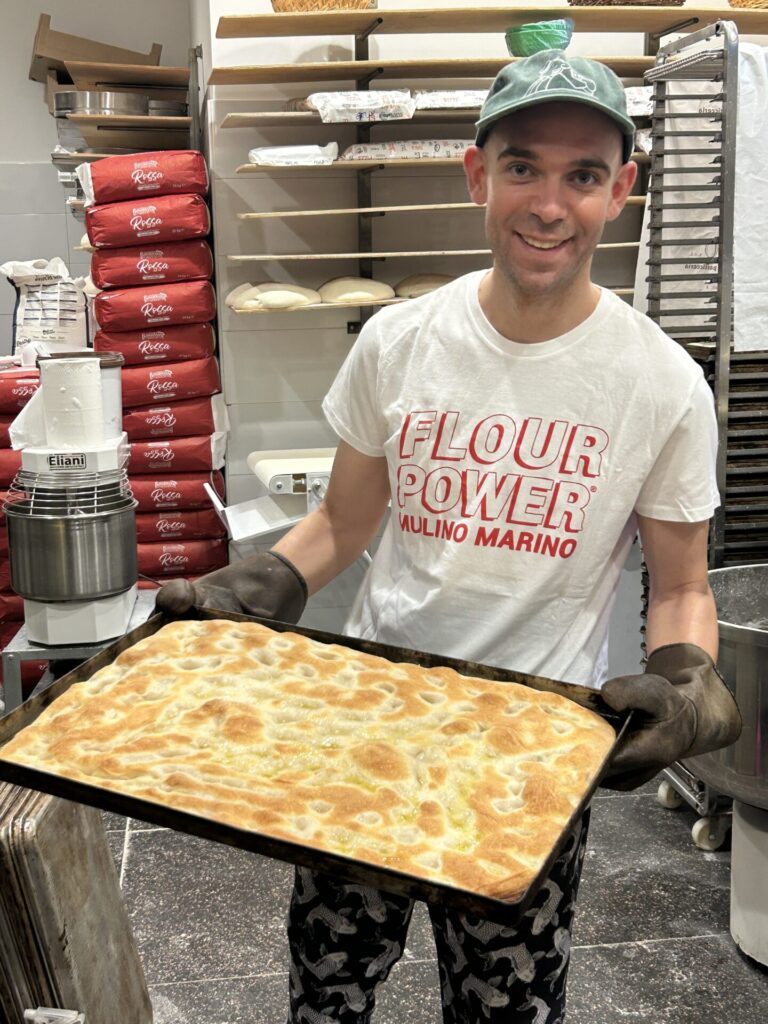
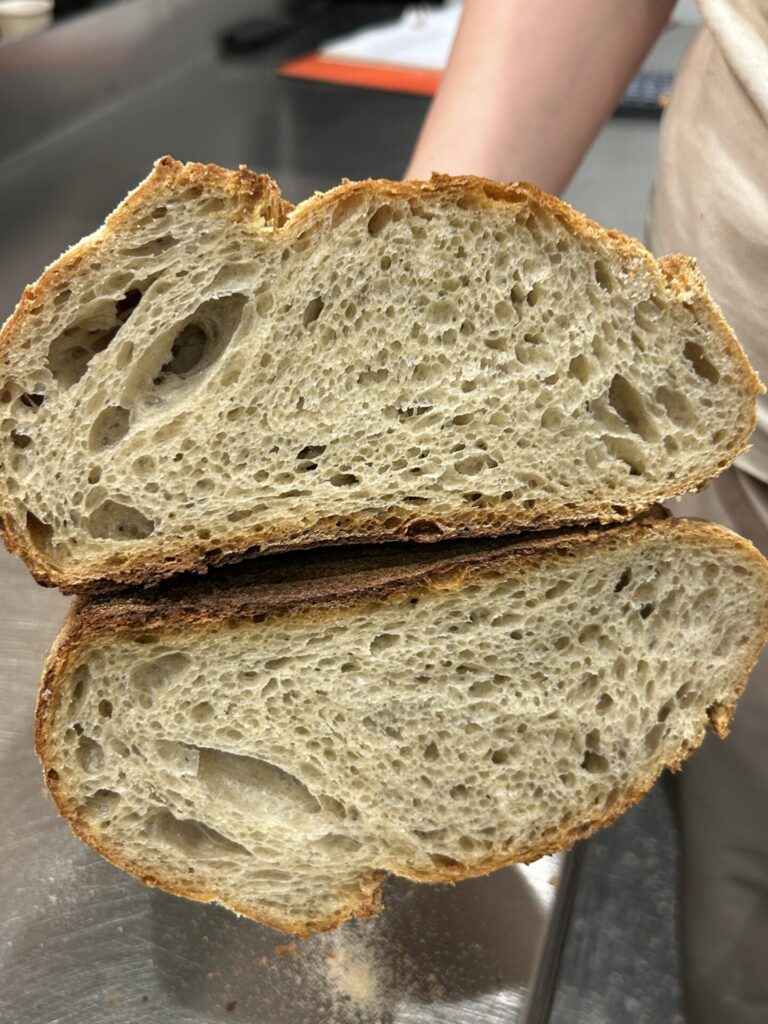
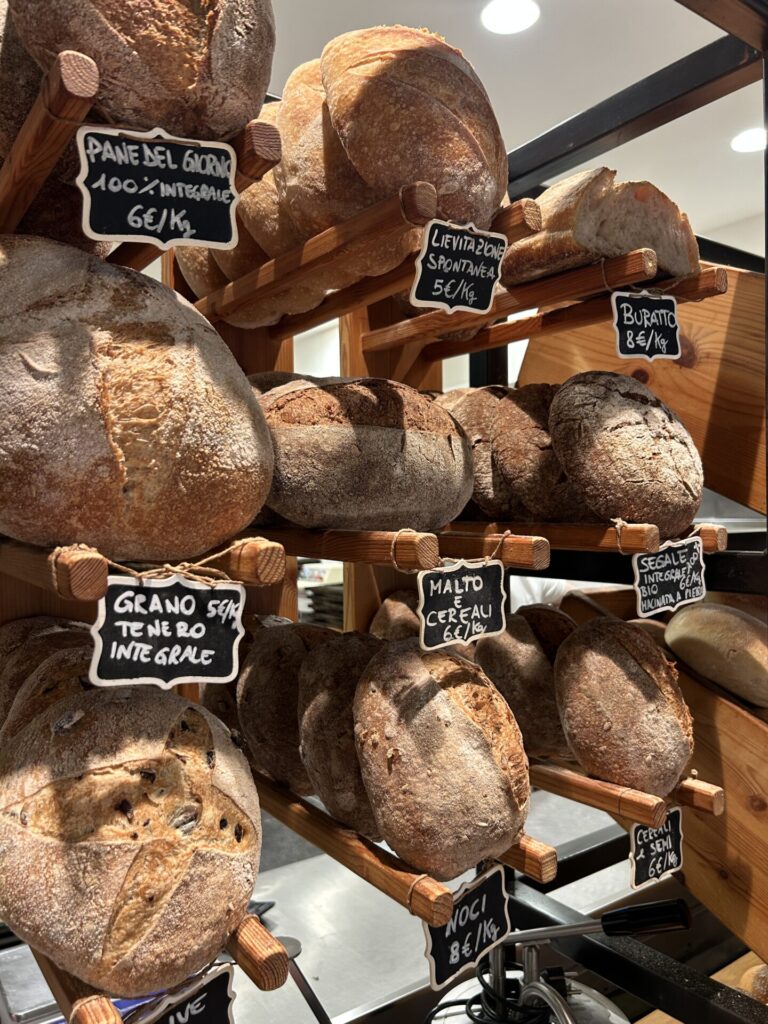
Zio Pagnotta is very small family-run bakery where work is still guided by the rhythm of fermentation rather than the clock.
You feel the dedication immediately — in the smell of the bread, in the intimate atmosphere of the workshop, in the way each product is described.
The core of production is naturally leavened bread. Among the most interesting variations is the one with aromatic herbs: the herbs are blended with extra virgin olive oil to create a deeply fragrant base.
Alongside it, there is an even more essential and fascinating bread: naturally fermented using only flour, water, and salt. No added yeast — fermentation happens through airborne microorganisms. The result is a light, digestible bread with a living structure. Probably one of the best I’ve tasted in recent years.
But Zio Pagnotta is not just about bread. The counter is a small story of western Ligurian tradition: from focaccia genovese to sardenaira (with tomato, anchovies, and garlic), to vegetable pies made with what the season and nearby countryside offer: chard, artichokes, asparagus, tomatoes. Everything incredibly fresh (I can confirm — I met the farmers delivering!).
Non solo pane
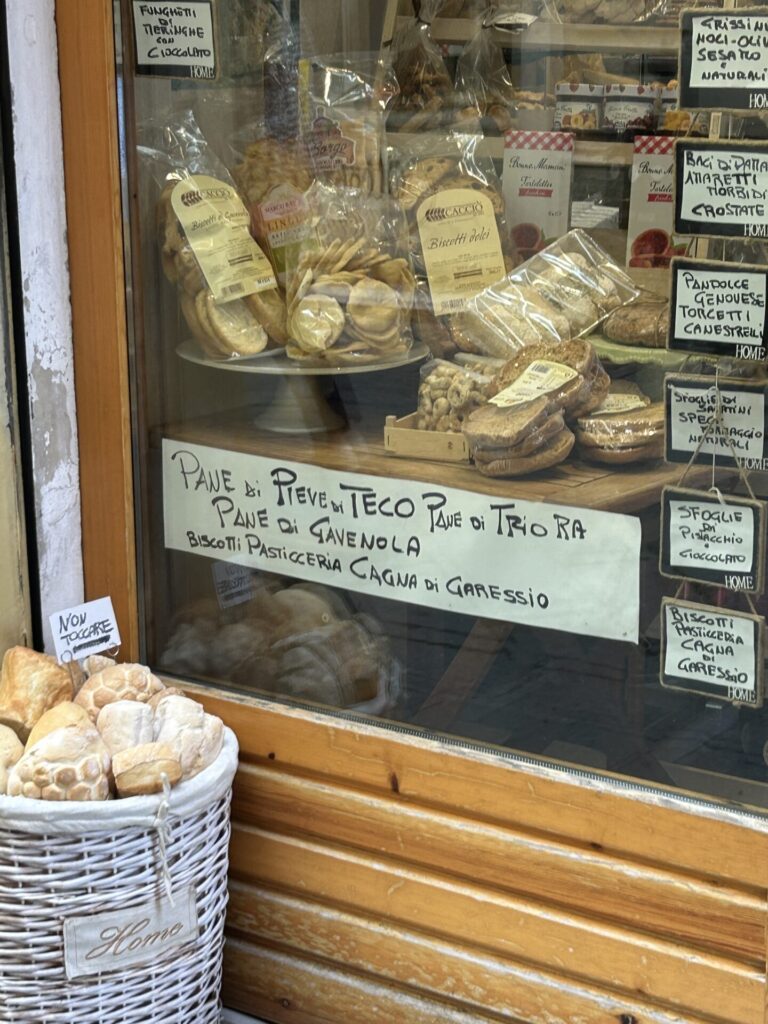
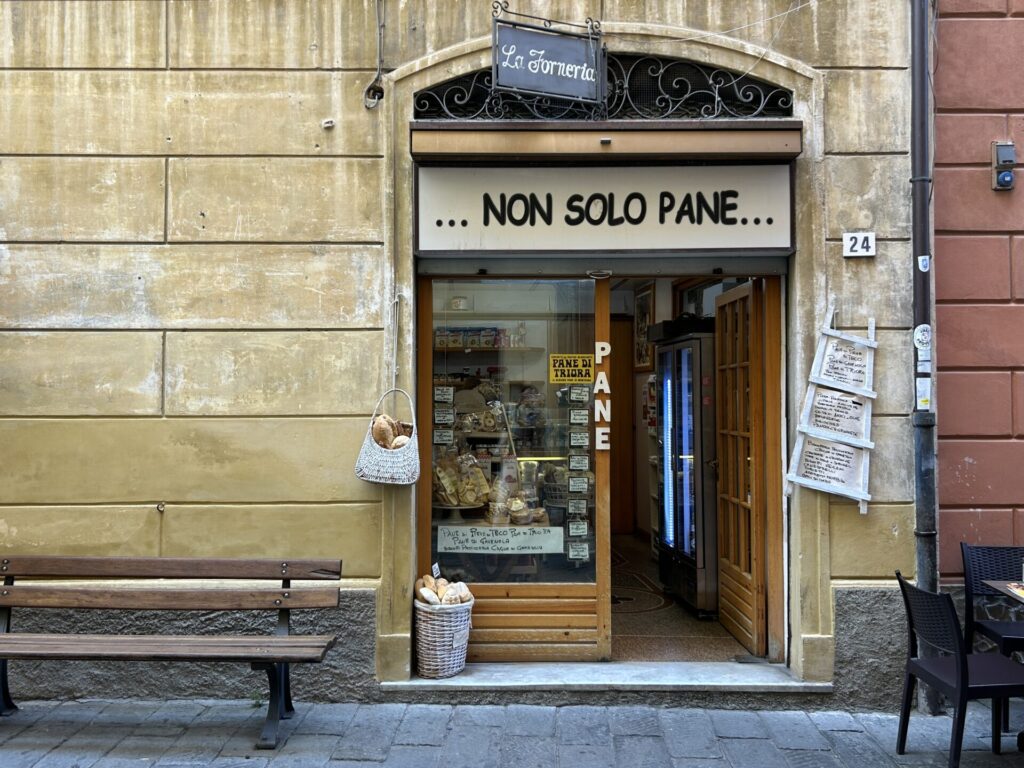
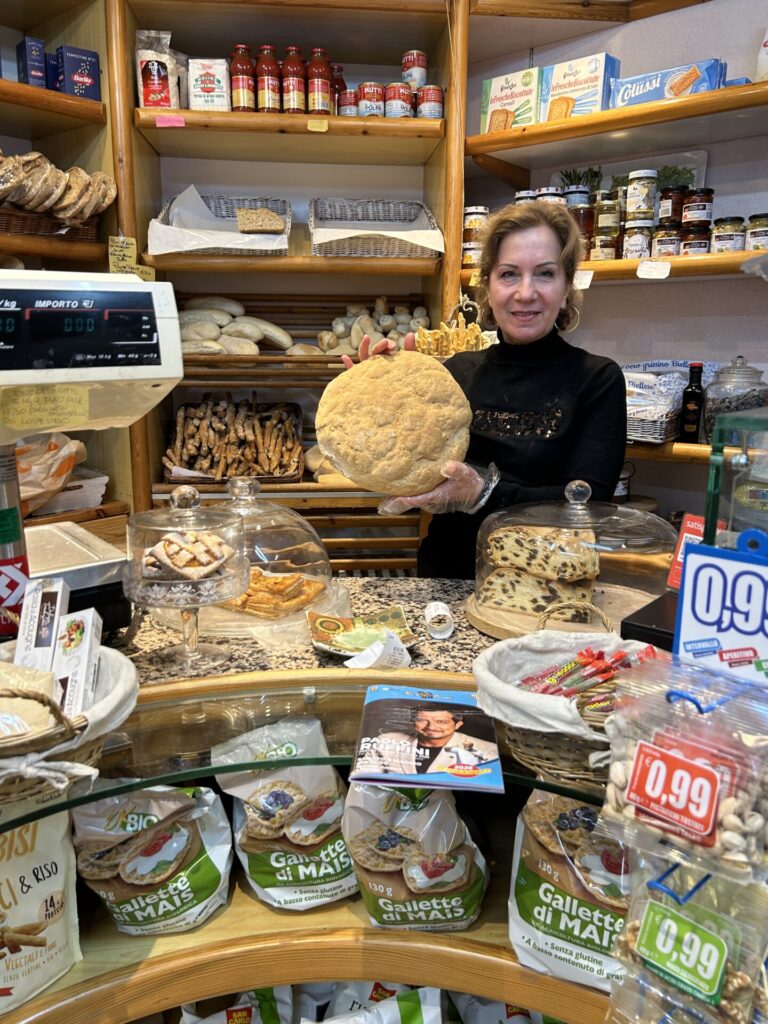
Non solo pane is a micro bakery and food shop specializing in traditional breads from inland Liguria.
Here you’ll find historic types such as the bread of Pieve di Teco, Triora, and Gavenola, characterized by thick crusts, long fermentation, and excellent keeping qualities.
Also available are biscuits from Pasticceria Cagna, a Piedmontese bakery tied to local confectionery traditions.
An essential stop if you want to discover the historic breads of the Ligurian hinterland.
BAXIN
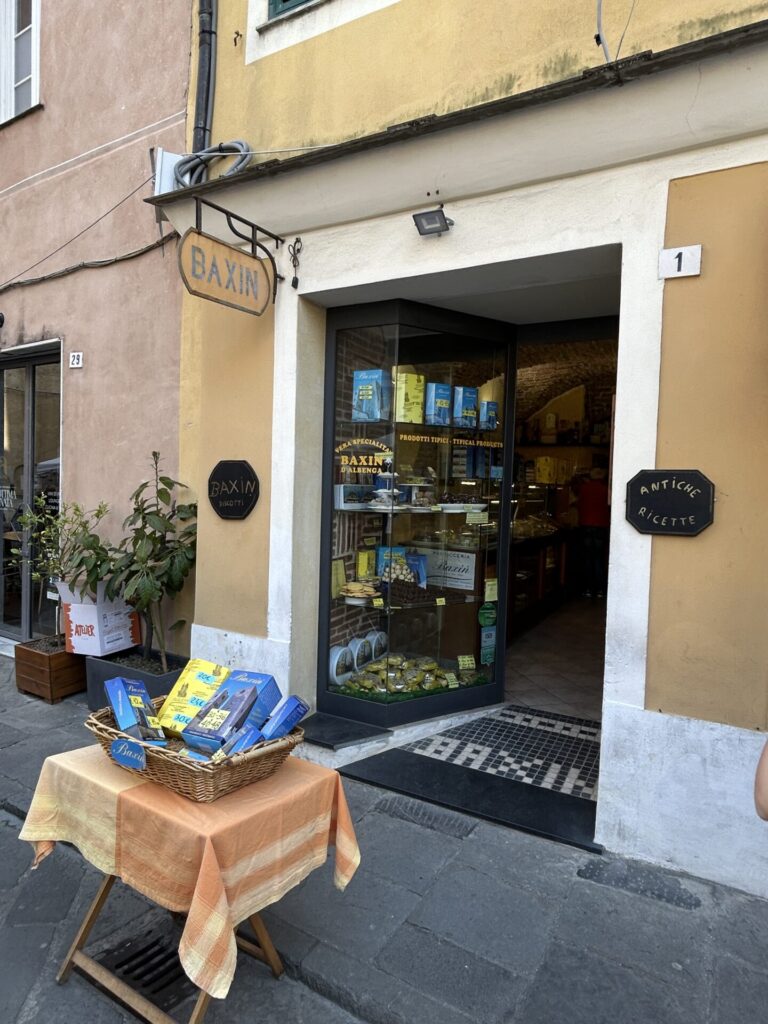
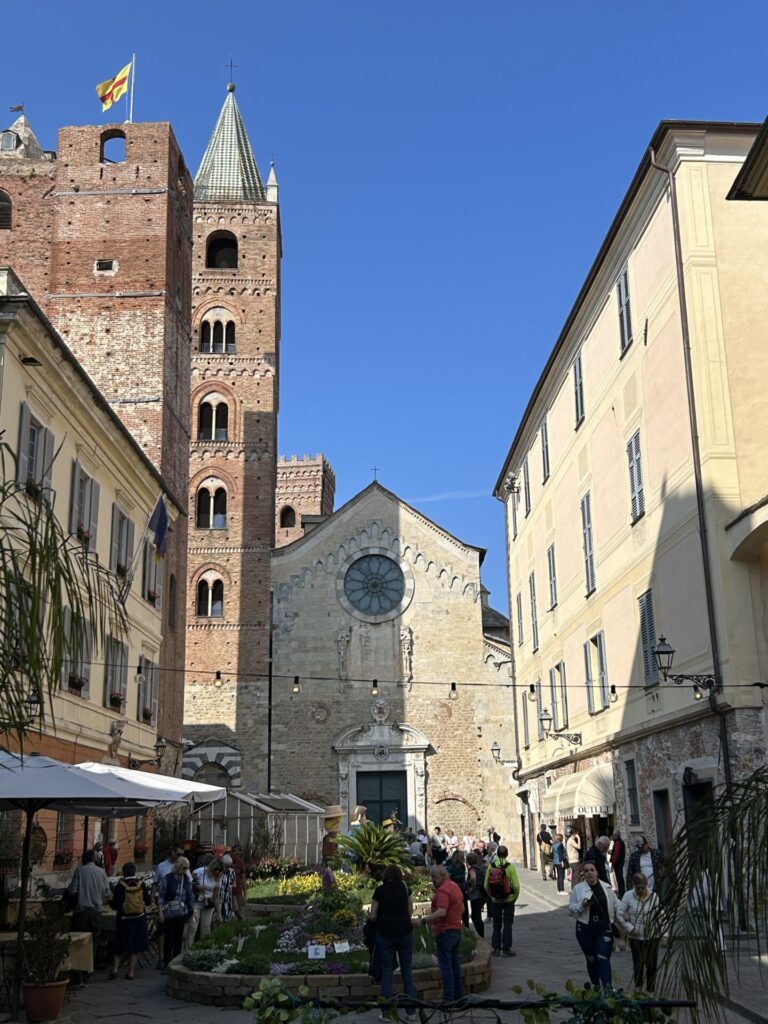
Overlooking the church square in the historic center, axin is a small pastry shop with a very focused production.
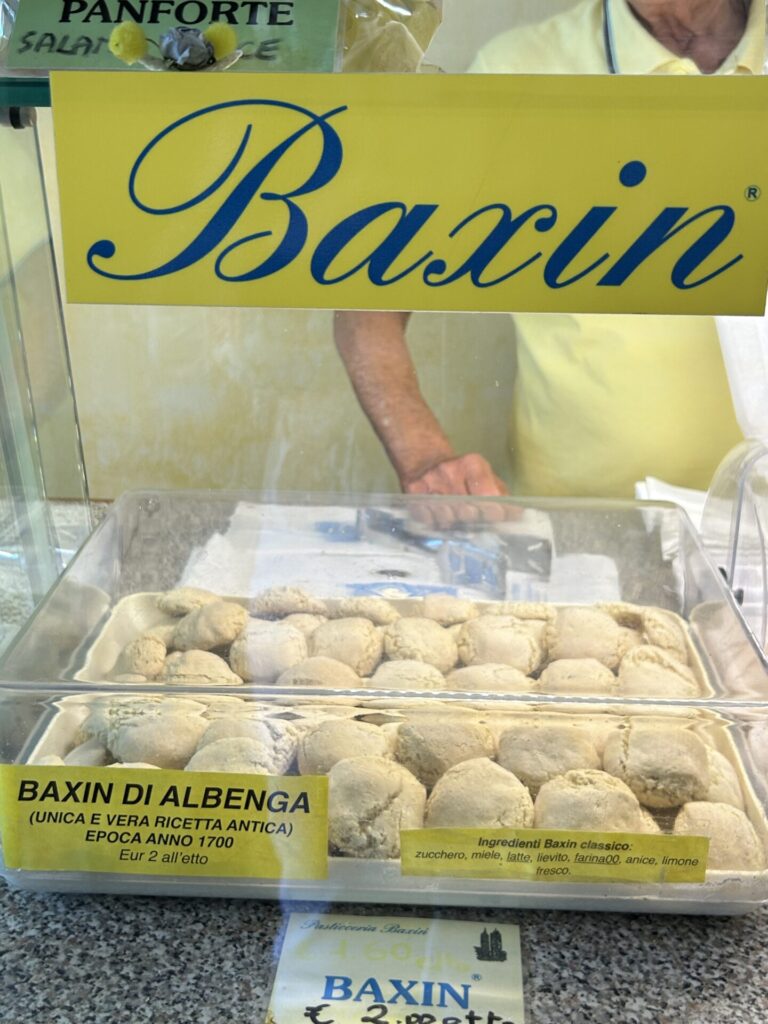
The main product is the baxin, from which the shop takes its name: ancient biscuits from Albenga, said to date back to the 1700s. Round, crumbly, and defined by the presence of anise seeds, which give them their distinctive aromatic profile.
Alongside them, you’ll find the traditional “pane del marinaio”, a sweet bread rich in dried and candied fruit, along with similar variations often enriched with chocolate or other ingredients.
A very simple place, working on a few products closely tied to local tradition.
Piccinini
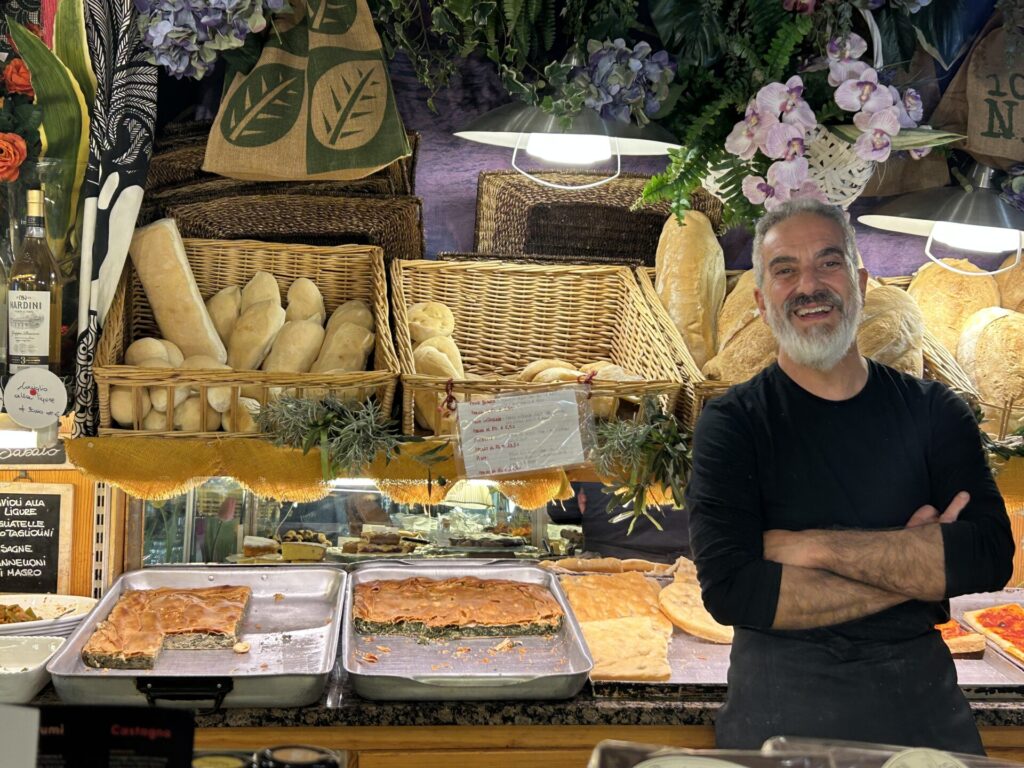
Gastronomia Piccinini is one of the oldest businesses in the city. The family has been running it since the early 1900s: from great-grandfather to grandfather to the current generation, in a rare continuity.
Originally it was both a bakery and an oil mill: bread and oil were produced in the same space. The workshop bordered a 13th-century Franciscan convent, and even today a small wooden door still leads directly into the cloister. In the past, it was always left open: people could come in, take bread, oil, or something cooked, and leave an offering.
Today the shop is run by Vittorio Piccinini, a bright, welcoming presence, fully aware of the value of what he carries forward. The cuisine is family cuisine.
Bread remains central. It is made using the same sourdough starter that has been kept alive for over a century. The flours are organic, stone-ground, and come from nearby Piedmont. The result is highly aromatic bread, with a structure that also favors digestibility.
Alongside it, the counter is dominated by vegetable pies, the true strength of the shop. They follow the seasons and reflect a very vegetable-forward tradition: lots of greens, little cheese or ricotta, and a precise use of aged Parmigiano Reggiano (around 26 months). The dough, compared to the Genovese version, is slightly richer in oil.
Among the most representative preparations: chard pie, artichoke pie, trombetta zucchini pie — all tied to the rhythm of the local garden.
Some recipes are still in the hands of the older generation: Vittorio’s mother, still active, prepares meat sauce, cima alla genovese, and a sponge cake from the hinterland made exclusively with extra virgin olive oil.
Alongside the prepared food, the shop offers a curated selection of local products: wines, oils, biscuits, flours, cured meats, and cheeses. In the back, a larger kitchen supports daily production.
Piccinini remains a true gastronomia in the fullest sense: a place where food is still connected to people, memory, and territory
PUPPO – Farinata
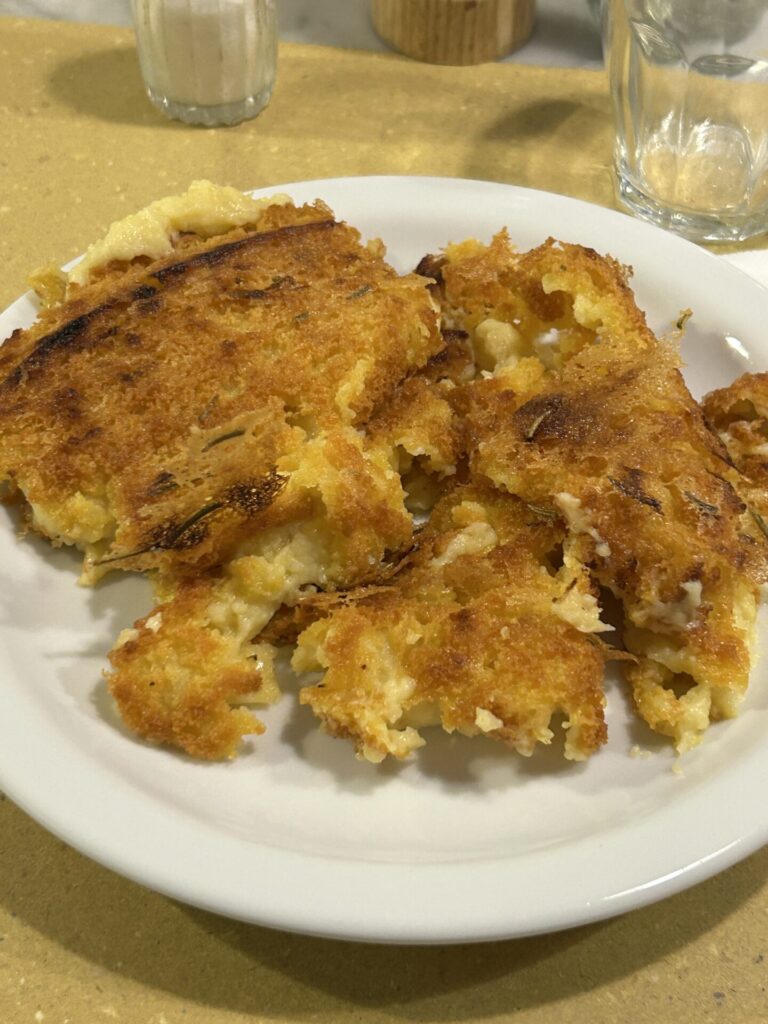
Among the historic spots of Albenga, Trattoria Pupo is an essential stop for farinata, prepared here according to a tradition that has remained unchanged over time.
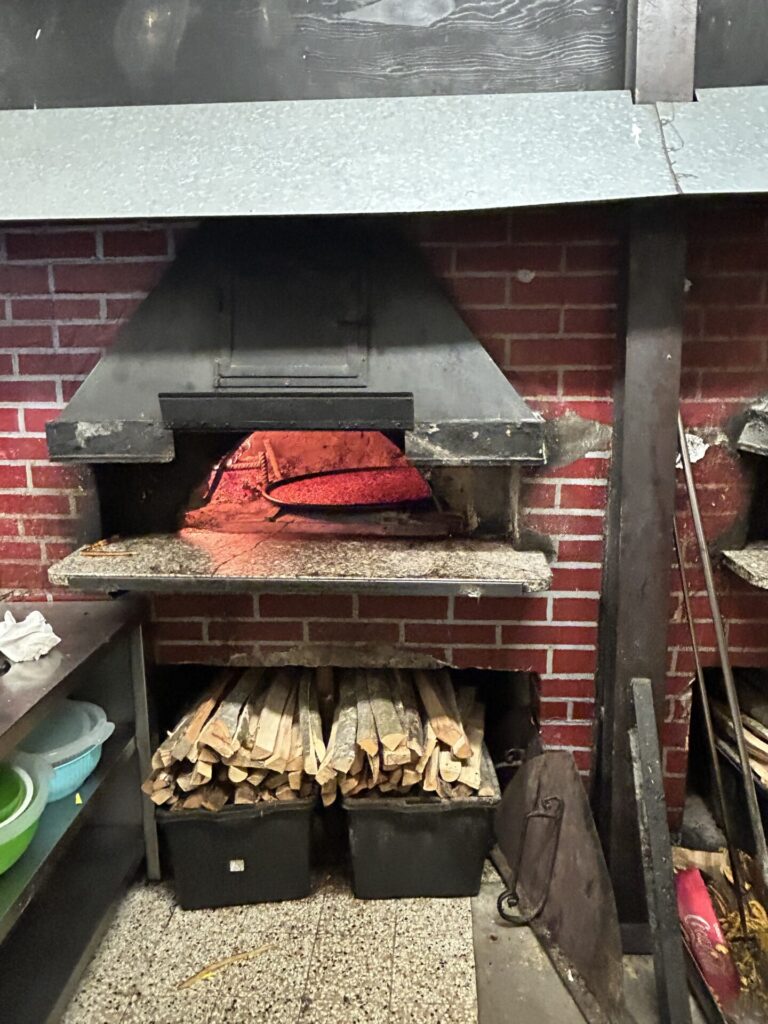
The story begins in the 1950s, when “Pupo” sold farinata on the street, with just wood-fired ovens and a cart. Between 1956 and 1958 came the first tables, and eventually the trattoria itself.
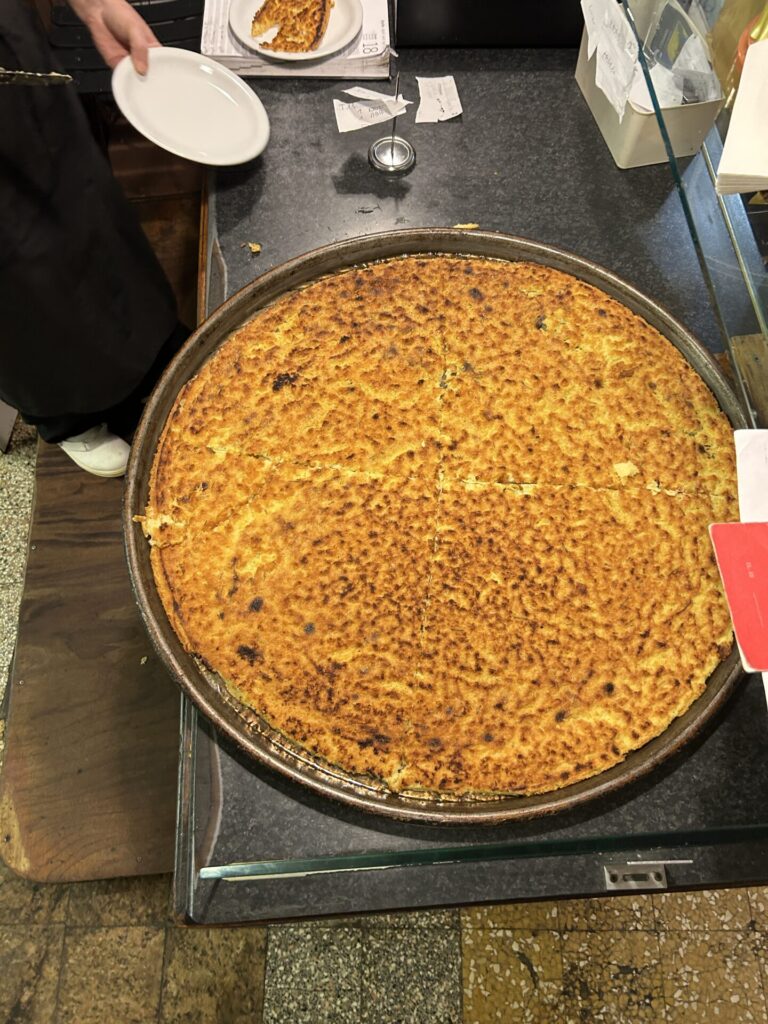
The ovens are still the original ones, wood-fired only, working today with the same rhythm. Every ten minutes, a farinata comes out of the large copper pans, always hot. During baking, flames lick the surface, creating the classic golden crust.
The result is a play of contrasts: a soft, creamy interior and a thin, crispy exterior with a deep hazelnut color.
A distinctive detail is the rosemary: just a few leaves, enough to give that aromatic note that immediately evokes the Ligurian landscape.
Since 2003, the place has been run by a family already experienced in making farinata. The father, now elderly, still personally prepares the torta pasqualina.
Alongside the farinata, you’ll find other Ligurian classics: fried panissa, torta pasqualina, stuffed vegetables.
The space is simple and coherent with its history: wooden tables with marble tops, terrazzo floors, walls of wood and lime. A trattoria that has remained true to itself.
Bear House- birrificio agricolo
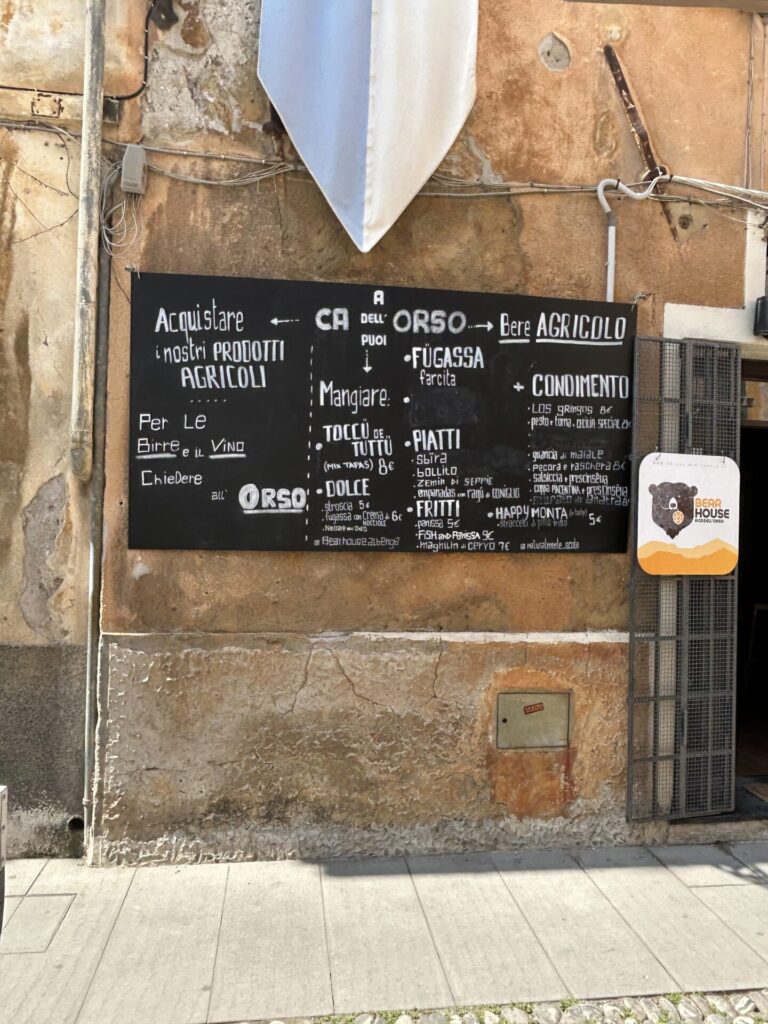
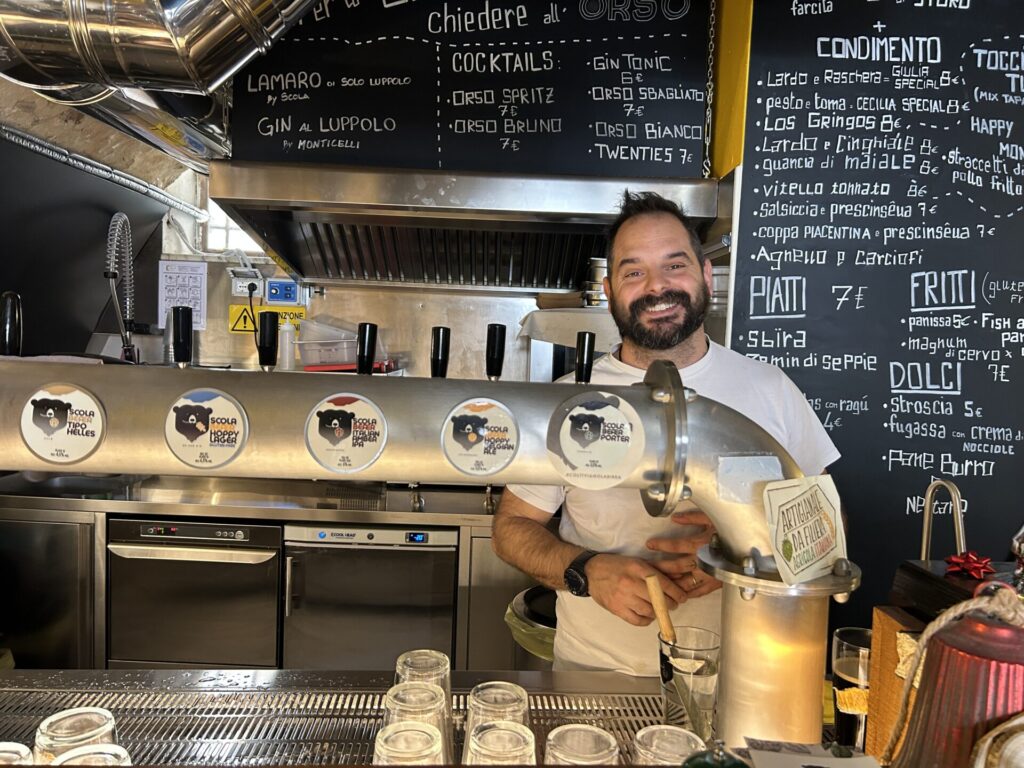
In a cobblestone square in the historic center, Bear House, is a project that combines farm, brewery, and pub. They define themselves as an “agricultural brewery”.
The idea comes from growing their own raw materials: barley and hops are cultivated by the company itself in the plain. Beer production is currently outsourced to Piedmont, but the goal is to bring it entirely on-site.
The space is informal, inspired by English pubs: large shared outdoor tables, no table service, a convivial atmosphere.
Alongside the beers, the food offering is surprisingly rooted in the territory: quick dishes halfway between street food and Ligurian tradition. Stuffed focaccia, but also less common dishes: sbira (tripe soup), zimino di seppie (chard and cuttlefish stew), fried panissa, and stroscia (a crumbly olive oil cake from the hinterland), all served in a simple and direct way.
The project is led by Samuele Scola, who comes from a family with a long tradition in hospitality. His grandparents ran a historic restaurant in Castelbianco. That legacy is evident in the quality and the attention to Ligurian cuisine.
Bear Lab – gastronomia contemporanea
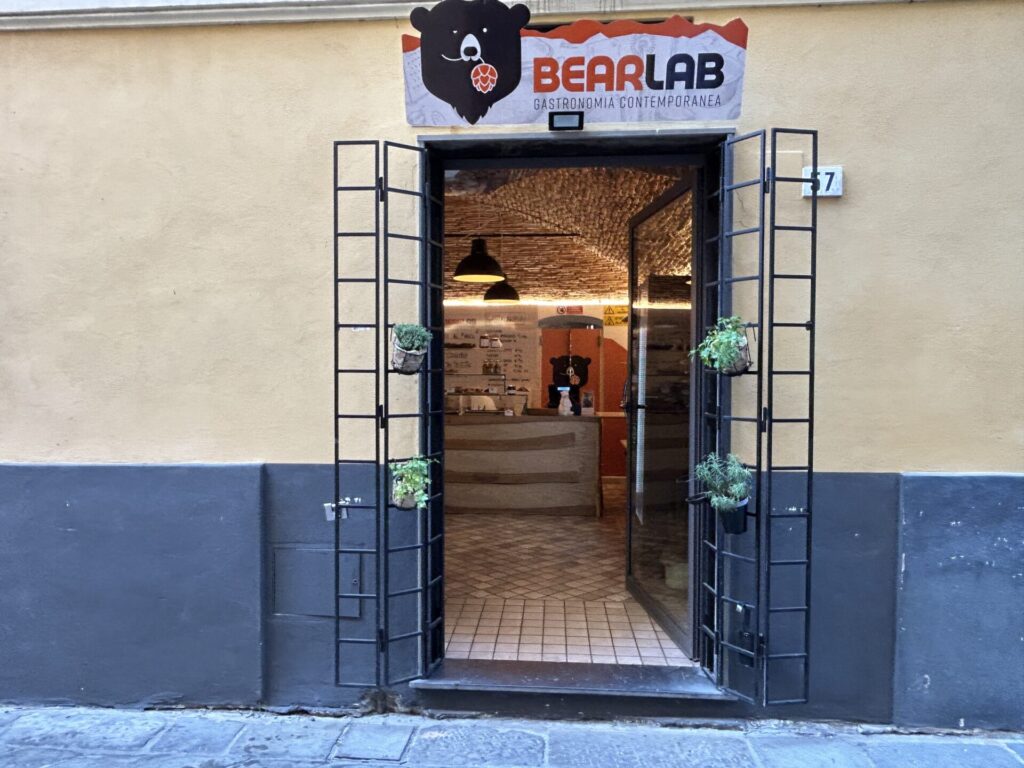
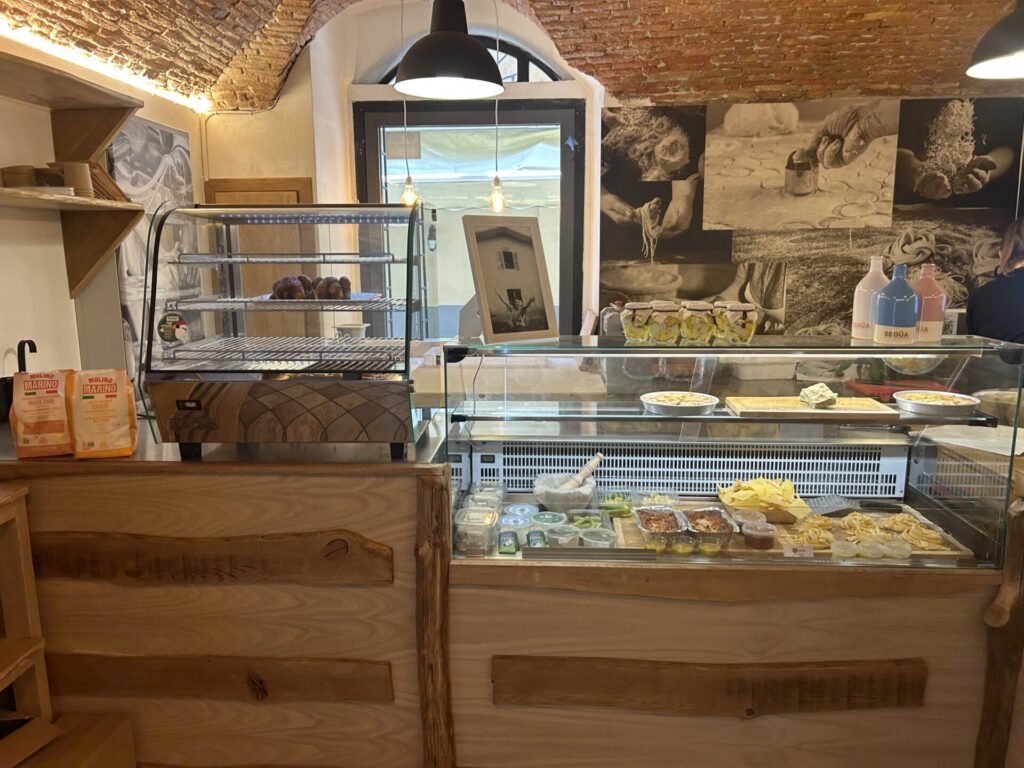
Sempre loro, i proprietari di Bear House, hanno aperto nelle vicinanze Bear Lab – una gastronomia contemporanea, con un’impostazione giovane e funzionale.
The same owners of Bear House have opened a contemporary eatery nearby – Bear Lab – una gastronomia contemporanea, -with a young and functional approach.
The base is still Ligurian cuisine: savory pies, polpettone, soups, stews, and focaccia. Traditional dishes, designed for more flexible consumption.
Once a week, fresh pasta is made by hand directly in the window — if you’re lucky, you can watch it being prepared live.
The most interesting aspect is the production system: dishes are blast-chilled immediately after preparation to preserve quality and safety. They are then sold frozen or reheated on request.
This approach reduces food waste significantly without compromising quality.
Alongside the prepared dishes, there is also a small selection of carefully chosen local products.
Casa del Gelato
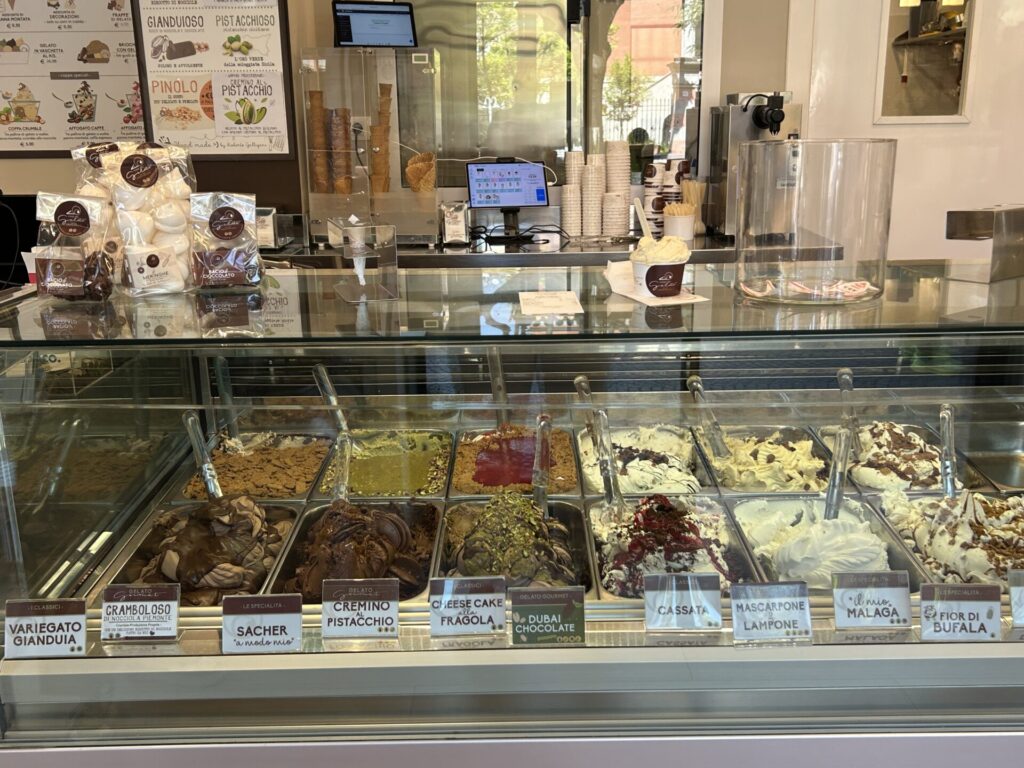
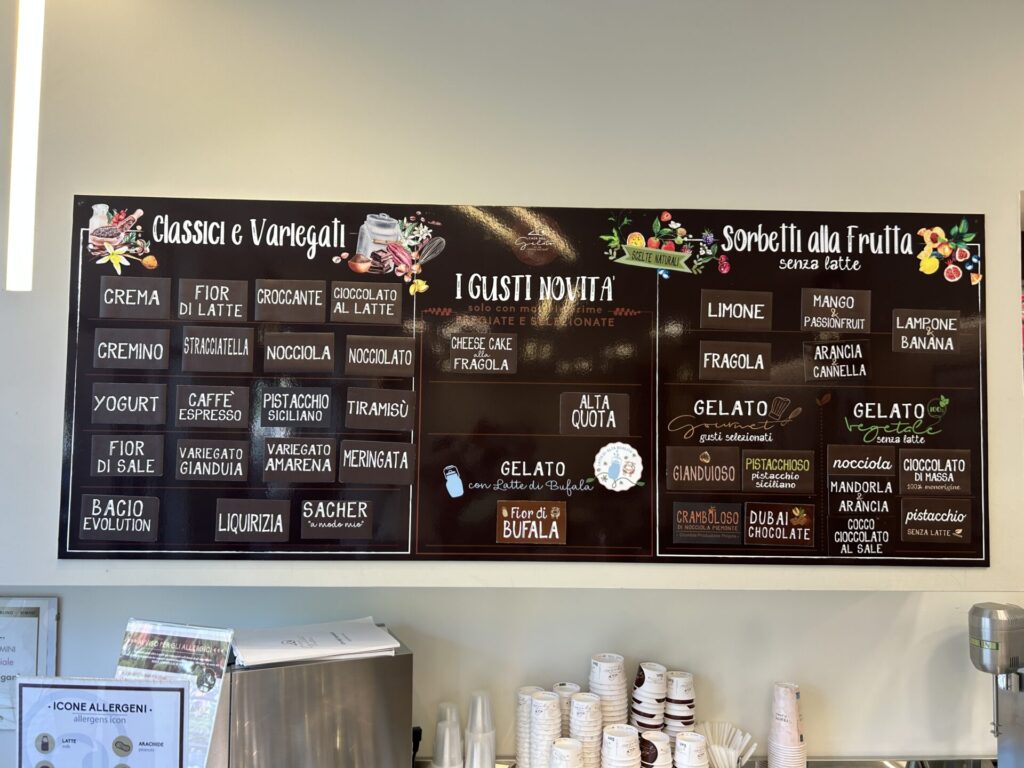
Just outside the walls, near the train station, Casa del Gelato:is an artisanal gelateria active for over thirty years, run by Roberto and his son.
About 90% of what is served is made in-house. Rather than “zero kilometer,” Roberto prefers to talk about “good kilometer”: when ingredients are not local, they are still chosen for proximity and quality.
The flavors change frequently. Among the most interesting: fiordilatte with sea salt crystals and caramel, and the “cramboloso” with homemade hazelnut biscuits.
Each gelato is built on multiple textures: creamy, soft or syrupy, and always a crunchy component from biscuits or crumble.
Great attention is given to intolerances: almost all gelato is gluten-free, including added elements. There are also sugar-free and lactose-free options.
Noberasco – old candied and dry fruit shop
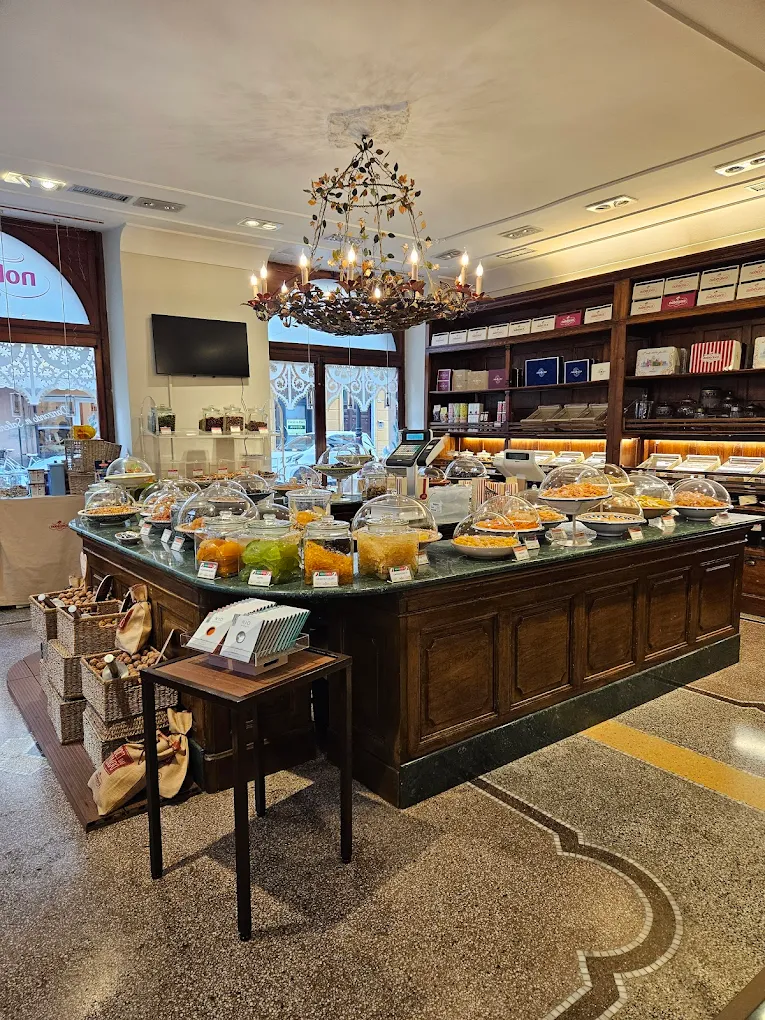
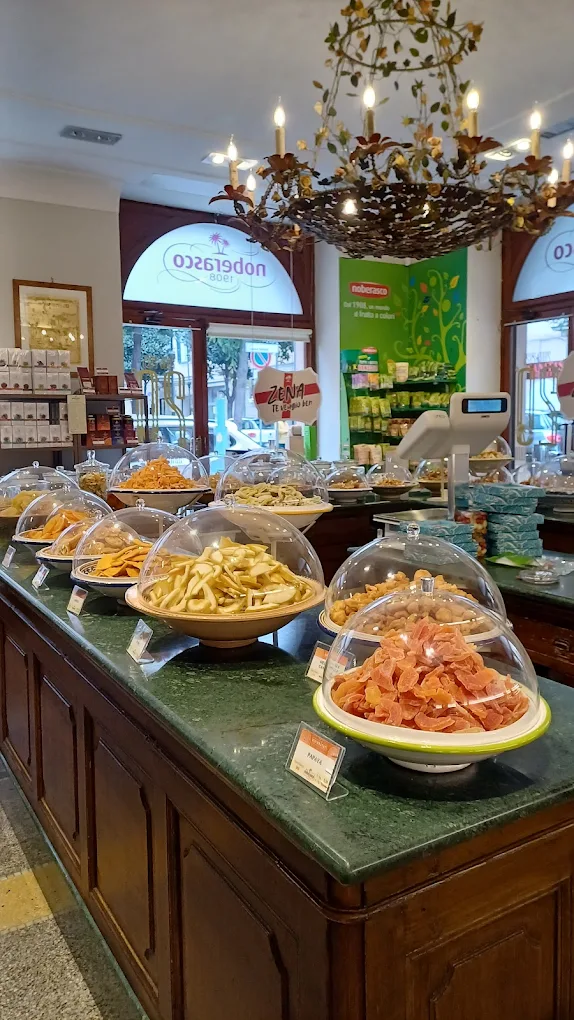
Walking into Noberasco, in the heart of Albenga, feels a bit like stepping back in time.
The shop has a deeply evocative atmosphere: antique furniture, terrazzo floors, tiered stands and large glass jars filled with dried and candied fruit, displayed almost like small treasures. It’s not just a store, but a true boutique of taste, with an aesthetic that recalls the early 20th century, when everything began right here in the Albenga plain.
Your eyes move from one color and texture to another: soft apricots, figs, dates, candied peels, chocolate-covered fruit. Everything is arranged with almost theatrical care, under glass domes and in transparent containers that invite you to look before you taste.
Noberasco is a historic company, founded in 1908 in Albenga, when the family began processing the fruits of the local plain and distributing them beyond the region. Today the selection is extensive, with products sourced from all over the world, always chosen with a strong focus on quality.
What stands out most is the balance between tradition and a contemporary way of presenting the product: the charm of an old-world shop combined with a modern approach to storytelling, packaging, and gifting.
It’s one of those places you walk into out of curiosity—and end up staying longer than expected, just looking around.
Enoteca Malandrone
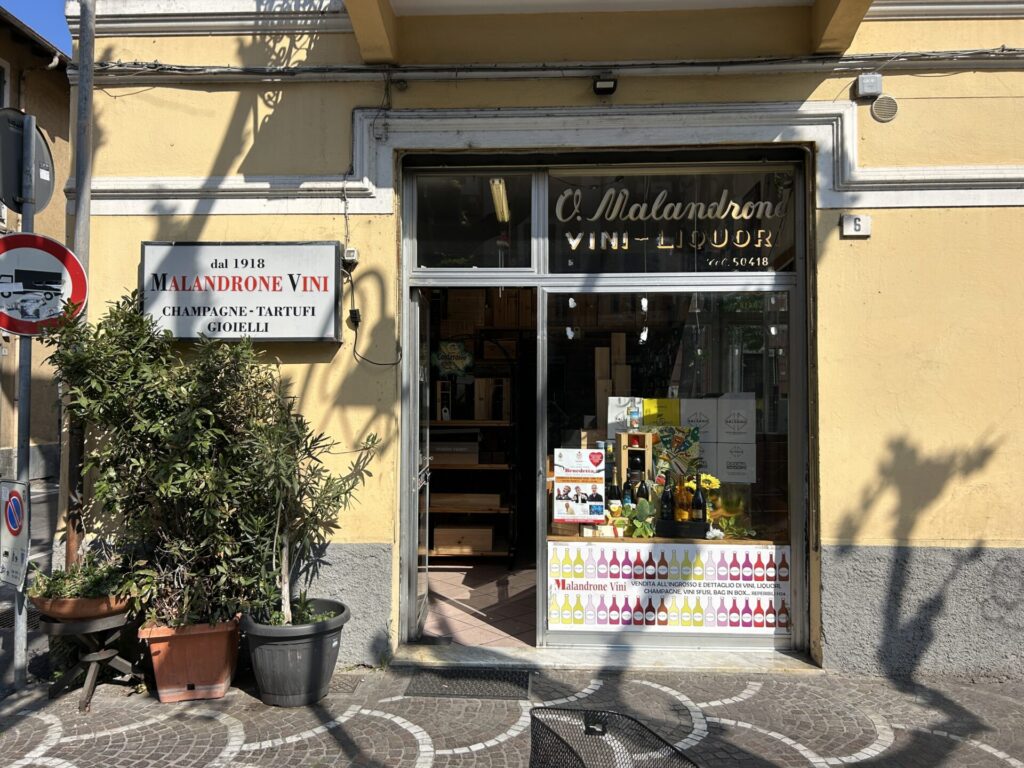
Just outside Porta del Mulino, enoteca Malandrone has been a reference point since 1918.
The selection is broad — wines, spirits, champagne, truffles — but the most interesting aspect is the focus on wine.
Rather than a generic regional selection, the focus is on western Liguria, with a very high number of labels per grape variety and area: Pigato, Rossese, Ormeasco di Pornassio, Granaccia, and other local varieties.
The result is a deep and detailed selection within a specific territory, ideal for comparing producers within the same denomination.
In recent years, they have also launched a distillery — the first in Liguria — producing grappa from local pomace and liqueurs made from local ingredients, such as limoncino and chinotto liqueur.
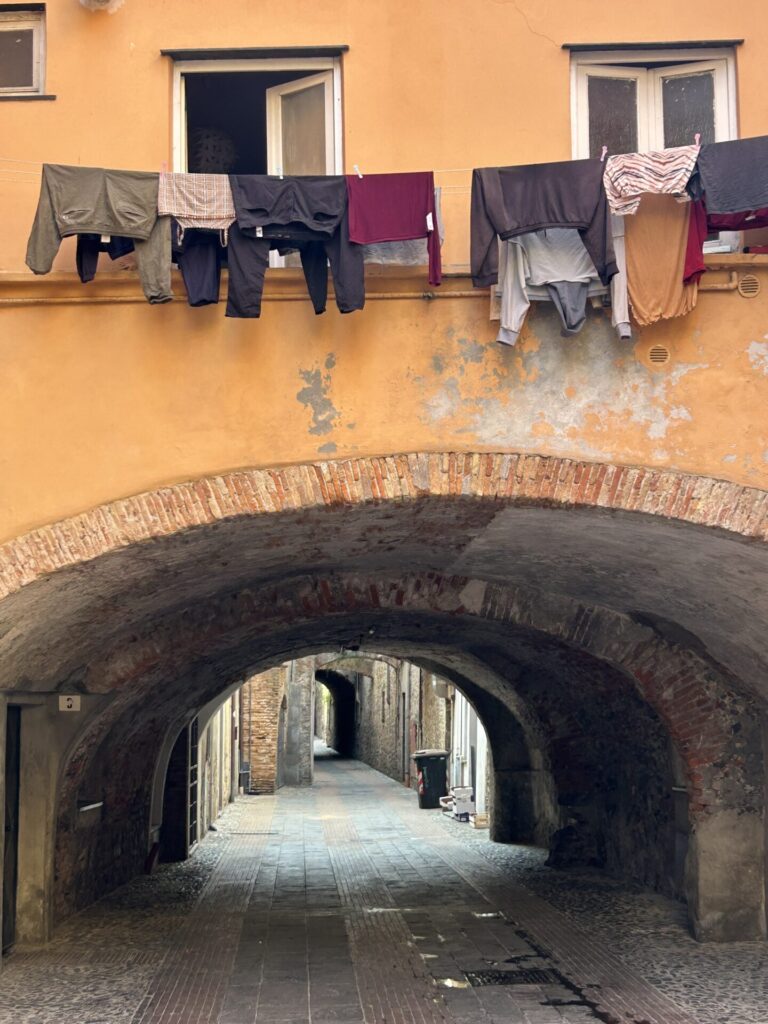
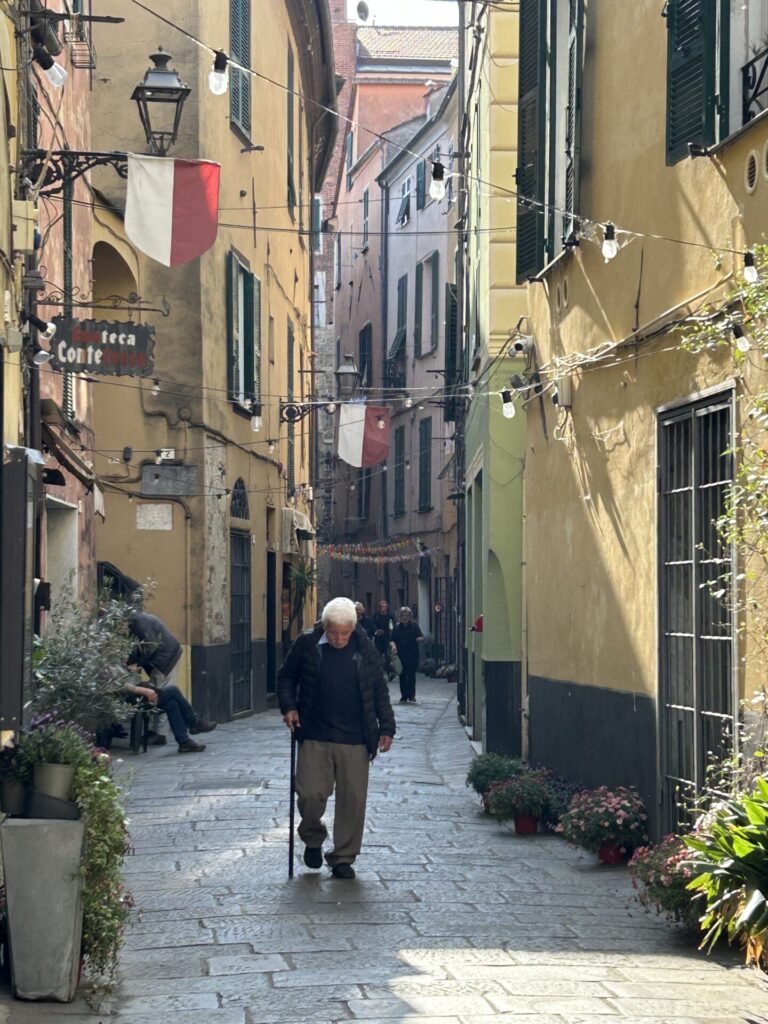
Albenga is a city that reveals itself slowly, and food is one of the most direct ways to truly enter it.
If you are planning a trip to Liguria with a group of friends and would like to explore these themes with me, we can create a tailored experience: a food tour of Albenga, a visit to an olive mill with tasting, an inland experience focused on extra virgin olive oil, or a Ligurian cooking class.
You can write to me — it will be a pleasure to build something together, starting right here, among the flavors of Albenga.
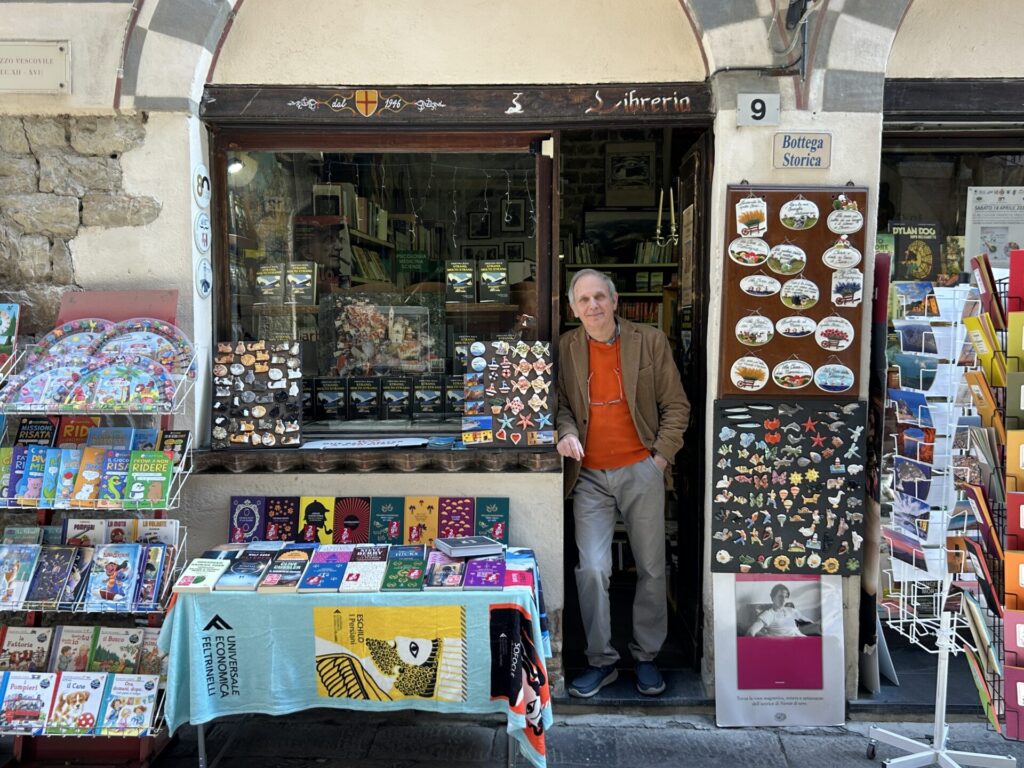
If instead you’d like to take a piece of this experience home, my book Liguria in cucina – The Flavors of Liguria is available in Albenga at Libreria San Michele, or you can order it directly online from my website. .
ALBENGA FOOD GUIDE
Ho raccolto tutti gli indirizzi in una mappa interattiva che puoi usare mentre cammini in città.
La puoi scaricare a questo link o consultarla qui sotto.